Getting an Acne Prescription Online When the Dermatologist Waitlist Is Months Away
Telehealth can deliver first-line acne drugs in days, not months, if a licensed clinician approves.

Asynchronous telehealth offers a clinically sound way to get first-line acne prescriptions, including tretinoin and clindamycin, without waiting months for a dermatologist appointment. Most platforms return an assessment within 24 to 72 hours, though prescribing depends on a licensed clinician’s review. Message-based visits can cost less than an uninsured office visit, but whether patients can afford them depends on both the consultation fee and the cost of medication.
Why the dermatologist waitlist is a clinical problem, not just an inconvenience
Patients who wait months to see a dermatologist may find that their skin gets worse while they look for help. Rivera et al.’s 2026 cross-sectional study of dermatology patients in Puerto Rico found that most waited more than three months for care. More than a third reported worsening symptoms during the wait, and nearly two-thirds used over-the-counter or herbal remedies in the meantime. These findings cover dermatology patients with a range of conditions, including acne. They nevertheless show why a delayed appointment can represent more than a scheduling frustration.
The same study found that patients who sought medical dermatology care reported a significantly greater effect on their quality of life than those who sought cosmetic care. Acne deserves that medical framing. Access is also uneven. Patients with Medicaid wait longer than those with private insurance, and the shortage of dermatologists hits rural and underserved communities hardest. For someone facing those barriers, waiting for a conventional appointment is not the only route to treatment.
What is actually happening in acne skin — and why it can worsen during a long wait
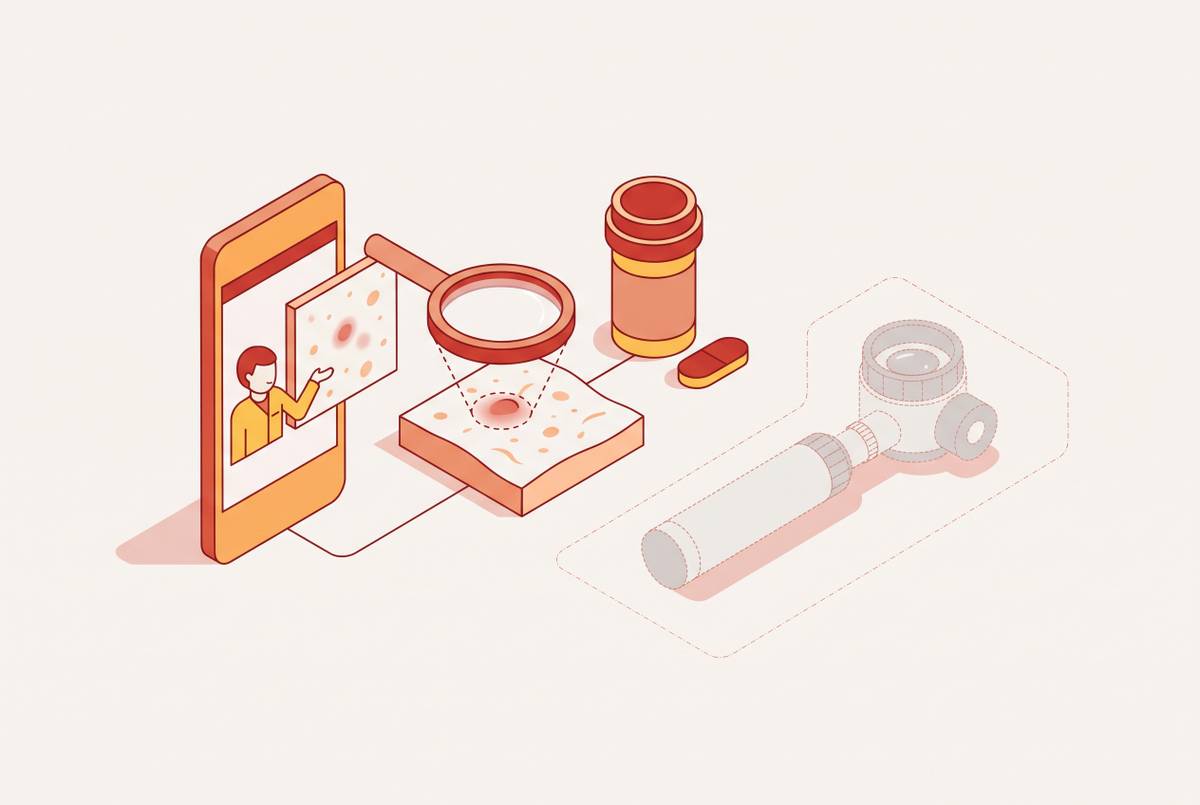
Acne involves four interacting processes, namely excess sebum production, follicular hyperkeratinization, inflammation, and colonization by Cutibacterium acnes. In everyday terms, these involve excess skin oil, a buildup of cells within follicles, inflammation, and bacteria. These processes can reinforce one another without treatment. Hormonal shifts, a high-glycemic diet, and environmental factors also influence sebaceous gland activity, so the skin’s condition can change during a long wait. Untreated acne is not a fixed picture.
A retinoid, benzoyl peroxide, and an antibiotic act on different parts of the process, rather than asking one medicine to address everything. That is the basis of multimodal treatment. Antibiotic use also needs limits because using antibiotics alone or for too long promotes resistance and raises the risk of Clostridium difficile and secondary infections. The American Academy of Dermatology’s 2024 guidelines advise against using an oral antibiotic on its own and generally limit its use to three to four months.
How asynchronous telehealth works and why acne fits the model particularly well
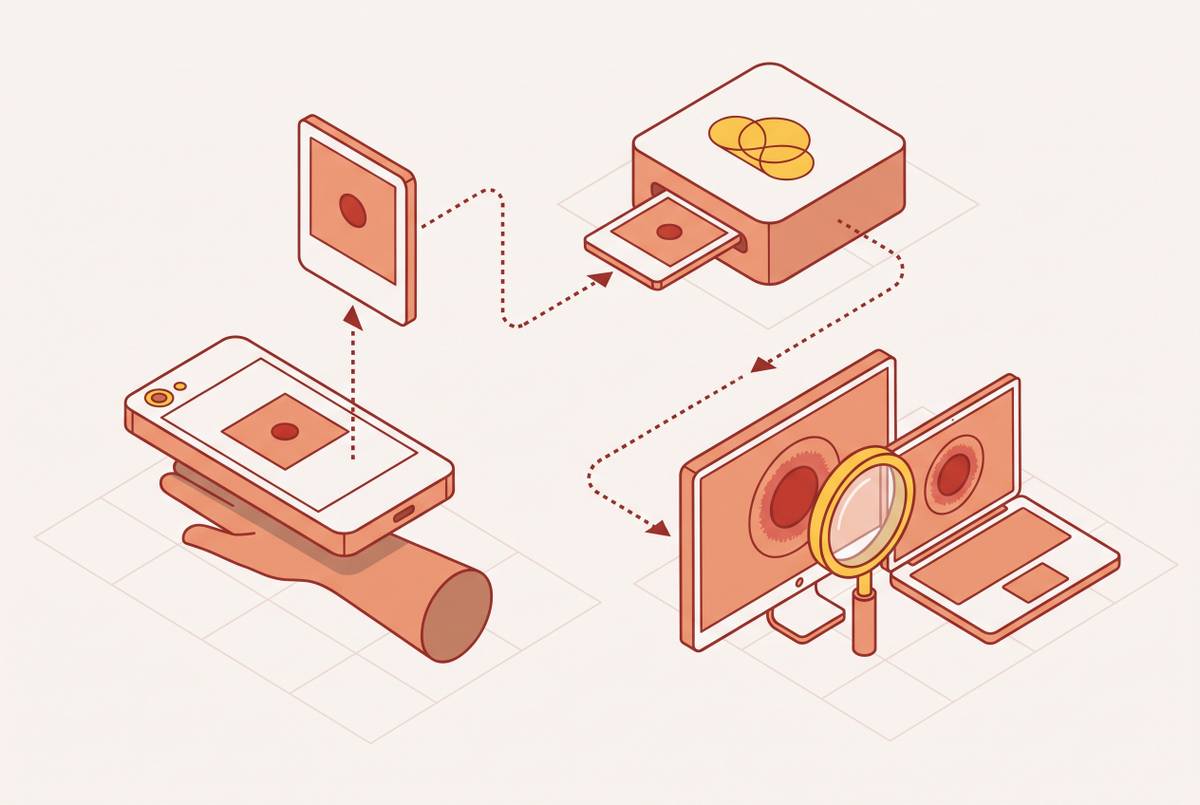
Asynchronous care, also called store-and-forward telehealth, allows the patient and clinician to be online at different times. You photograph your skin, complete a structured intake about your history and treatments, and submit both through a secure portal. A licensed clinician reviews the information on their own schedule, then sends an assessment, diagnosis, and treatment plan through the same channel. Most platforms have a turnaround of 24 to 72 hours, making a same-week assessment possible without a live appointment.
But can photographs and written answers support a useful clinical evaluation? For most mild-to-moderate acne, good photographs show what types of lesions are present, where they are, and how severe they are. Much of the remaining information comes from history, including hormonal patterns, product use, dietary triggers, medications, and genetics. The written intake therefore does real clinical work.
That suitability does not lower the prescribing standard. Only a licensed clinician can prescribe medication. The Academy advises that teledermatology services use reviewing clinicians with the appropriate license in the state where the patient receives care. Online care changes how information reaches that clinician, who remains responsible for the prescription.
Can a licensed clinician prescribe tretinoin or clindamycin through an online visit?
For most mild-to-moderate acne, online clinicians can prescribe the same first-line treatments available at an in-person dermatology visit. Options include topical retinoids such as tretinoin and adapalene, topical clindamycin, combination topicals, and benzoyl peroxide formulations. Oral doxycycline and minocycline are also available when appropriate, generally for a limited course of three to four months. An online visit is still a clinical assessment. The choice of medication depends on the acne pattern, what treatment the patient has already tried, and their medical history, as well as which prescription they ask for.
Isotretinoin requires a different level of coordination. The iPLEDGE REMS program governs its use whether the appointment is virtual or in person. The FDA’s updates allow at-home pregnancy testing during and after treatment with clinician approval, but testing before treatment must still take place in a medical setting. Some platforms can manage isotretinoin online, though care still requires regular blood work, iPLEDGE enrollment, and close work with the provider. Before starting, patients who are considering it should check that the service can meet those needs.
Not every treatment decision is about choosing between topicals and antibiotics. Spironolactone is another choice for patients it suits, especially when the acne pattern suggests that hormones play a role.
Hormonal acne and the role of spironolactone and oral contraceptives in online care
For adult women, acne concentrated along the jawline and lower face, flaring before menstruation, and responding poorly to topicals often has a hormonal component. That pattern gives the clinician a reason to think about hormone-directed treatment. It does not make such treatment universal. Location, timing, and previous response belong in the assessment together, rather than any one feature determining the prescription.
Spironolactone targets androgen-driven sebum production. A comprehensive meta-analysis published in August 2025 found significant clinical benefit for women with acne without a substantial increase in adverse effects. That finding supports its use in appropriate patients. Access previously typically required an in-person visit, while telehealth now makes this option more accessible to patients in rural areas or with scheduling constraints. Hormonal treatment can also lessen the need for long-term oral antibiotics, which helps with the risk of resistance discussed earlier.
Combined oral contraceptives are another hormonal treatment option. There are FDA-approved combined oral contraceptives for acne, and this care is commonly co-managed through the same virtual visit. That creates a useful connection between acne treatment and reproductive health care. For patients whose breakouts follow a menstrual pattern, information about current contraception and cycle-related changes helps the clinician consider those needs together.
How AI fits into a responsible online acne evaluation — and where its limits are
On a well-designed platform, AI helps organize the information from the intake and helps with triage. The diagnosis and treatment plan remain the clinician’s responsibility. Madison and Trevino’s systematic review found that AI-assisted technologies, particularly when integrated into teledermatology, significantly reduced dermatology wait times. That supports a role for AI in improving access. It does not establish that an automated output can replace a medical evaluation.
What are the limits when a system evaluates skin photographs? The same review documents concerns about algorithmic bias, limited datasets, poor generalizability across patient populations, and uneven image quality. Those weaknesses restrict how confidently an AI result can be applied to an individual patient. Clinical judgment cannot be removed from the process. A responsible service uses AI as decision support and has a licensed clinician review its output before prescribing.
For patients comparing services, the distinction is practical. Look for explicit clinician review and sign-off on every case, rather than AI-generated results without that oversight. Patients need to know who makes and accepts responsibility for the treatment decision on a platform that uses AI.
What to look for when choosing a telehealth platform for acne care
To turn those distinctions into a choice, start with who reviews the visit. Confirm that the clinician is licensed in your state before submitting an intake, and look for a clear statement that every case receives clinician review. Dermatology board certification is a meaningful signal. So is a supervised nurse practitioner or physician assistant with dermatology training. A convenient portal alone says little about the clinical care behind it.
The intake offers another way to judge quality. It should ask about medical history, medications, allergies, earlier treatments, hormonal factors, and skincare products, along with a description of the acne. Photo instructions should explain lighting, angles, and distance. Those details support the assessment. A useful treatment plan should then explain what was prescribed, how to use it, what to expect, and when to follow up.
Access after the assessment deserves equal attention. Look for a clear way to ask follow-up questions, along with a pathway to in-person evaluation when online care is insufficient. A message-based consultation can cost much less than an uninsured office visit, but the advertised consultation fee alone does not show what the full treatment will cost. Confirm whether prescriptions are charged separately and whether the service works with your pharmacy.
How to prepare for an online acne consultation so the clinician can give you their best assessment
Once you have chosen a service, preparation helps the clinician make a more tailored assessment. Start with clear photographs in natural daylight or bright, even indoor light, and avoid flash because it flattens texture. Photograph clean skin without makeup, with hair pulled back. Include the full affected area and a close-up. Show the jawline, forehead, or back when those areas are involved, so the photographs capture distribution as well as individual spots.
Have your full skincare routine ready in order of application, together with all current medications, hormonal contraceptives, supplements, and topical products. Include any allergies and adverse reactions you have had to skincare or medicines. Treatment duration belongs here too. Tell the clinician what you have already tried and how long you used it.
Patterns can be just as useful as product names. Describe where the acne appears, whether it changes with the menstrual cycle, and any recent changes in stress, diet, or sleep. Explain how long the current breakout has lasted, whether it is improving or worsening, and when the skin was previously better. Use lesion terms such as whiteheads, blackheads, papules, or cysts if you can. Together, these details give the clinician more to work with when selecting treatment and explaining the plan you receive.
How to read and use the treatment plan you receive
When the plan arrives, read it as instructions for a course of treatment. It should name each medicine and its class, explain what it targets, and show how it fits with the other treatments. Application details should specify how much to use, how often, and where it belongs in your product routine. The early weeks need explanation too. A complete plan describes what to expect over the first four to eight weeks, side effects to watch for, what to do about them, and when to follow up or return sooner.
Those expectations help you tell when your skin is adjusting and when to ask for advice. Initial purging or dryness with retinoids is common and does not automatically mean treatment is failing. Retinoid irritation, including peeling and sensitivity, typically peaks in weeks two to four and then subsides. Starting every other night is a common clinician recommendation, so follow the schedule your clinician provides. Oral antibiotics work more slowly than patients sometimes expect, with improvement typically appearing in four to six weeks and fuller effects around three months.
Nodular or cystic acne that persists after a full treatment course, or causes significant scarring, warrants in-person evaluation. Fever, a widespread rash, or severe side effects call for prompt in-person or urgent care. Online care has boundaries, and knowing them helps you use it confidently. For everyday acne, a reviewed prescription, clear instructions, and a defined follow-up path can make treatment navigable even when the dermatologist’s next appointment is months away.