What a $39 Online Dermatology Consultation Can and Cannot Do
Telehealth dermatology works for common conditions but cannot replace hands-on exams.
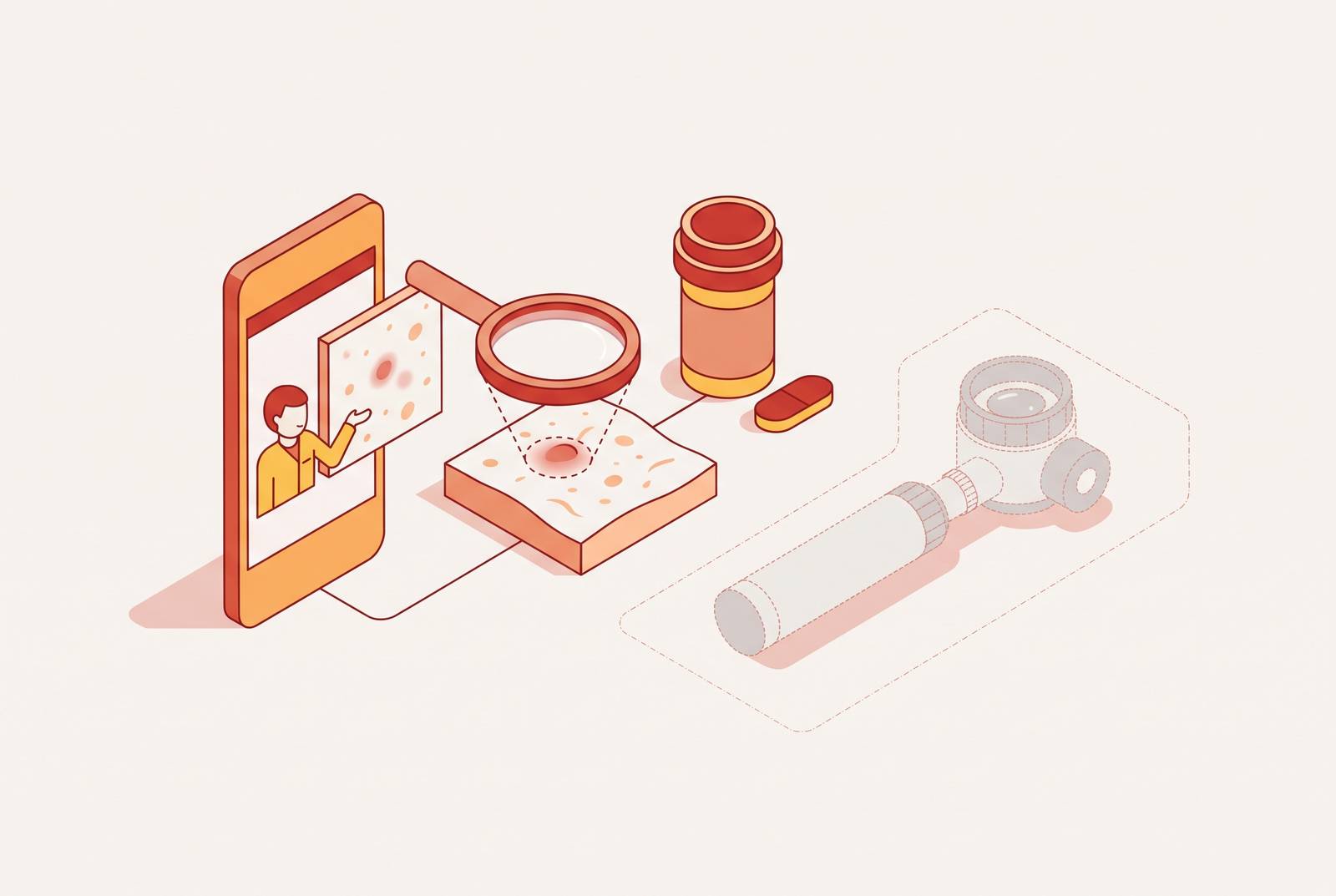
A low-cost online dermatology consultation can assess many common skin concerns and lead to prescription treatment, but it cannot replace an examination or procedure when one is needed. In AI-assisted telehealth dermatology with clinician review, software helps organize or screen the case, while a licensed clinician makes the final assessment and approves any prescription.
Why seeing a dermatologist takes weeks — and what a low-cost asynchronous visit actually is
Specialist scarcity, geography, and insurance complexity make access to dermatology a structural problem. New patients across the United States often wait many weeks, and common skin conditions can get worse or go untreated while they wait. For rural patients and people without insurance, that delay can become a substantial gap in care. Teledermatology triage can shorten the route to an initial clinical assessment from weeks to days.
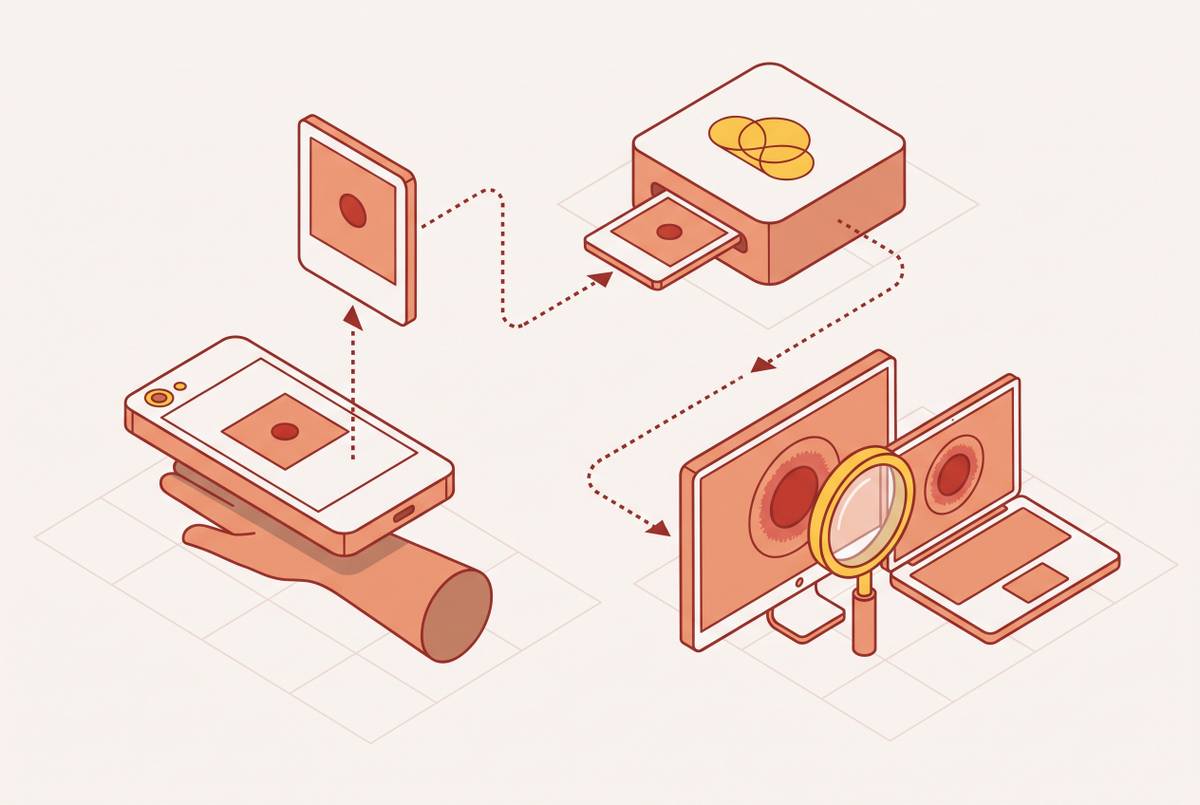
The low-cost consultation uses a particular format, known as asynchronous or store-and-forward teledermatology. Patients submit photographs and a medical history, and a clinician reviews them later. Neither person needs to reserve the same appointment time. This setup avoids missed visits and makes better use of the limited time specialists have, while keeping clinical oversight in place. A professional dermatology association’s teledermatology standards require appropriate licensure in the patient’s state for physicians and non-physician clinicians, so the format alone does not guarantee review by a board-certified dermatologist.
How store-and-forward teledermatology works in practice, step by step
The consultation begins with a questionnaire about how long the condition has been present, how it has changed, and which products or medicines the patient uses. Allergies belong in that history too. These details inform prescribing decisions as well as diagnosis, making the written intake a clinical input. The patient then submits photographs, including close-ups, multiple angles, and wider views showing the affected area. Sharpness is the most important technical feature.
Next, the dermatologist looks at the photographs and history together. Miiskin reports response times that typically fall well within the next day across its network, although turnaround is a platform-specific expectation. On some services, AI helps organize intake information or flag lesion characteristics before review. The clinician still issues the final care plan.
The patient receives a written diagnosis or first-line clinical impression, treatment instructions, and an e-prescription sent to a chosen pharmacy when appropriate. A first-line impression is not always a definitive diagnosis. Most platforms include a messaging window for questions about that consultation, giving patients a way to clarify the written advice. That window is distinct from an ongoing treatment relationship with unlimited prescription renewals.
Which skin conditions a photo-based consultation can reliably assess
Dermatology relies mostly on what can be seen, so good photographs can help with diagnosis. Acne and rosacea are strong examples. The American University of Beirut’s 2025 study found strong diagnostic agreement using unassisted patient photographs, with further improvement after brief standardized training. Acne, rosacea, and hidradenitis, considered as a combined category, had the highest diagnostic match across all three photo-acquisition methods tested.
Eczema flares can be assessed for medication adjustments, while established psoriasis can be reviewed for follow-up care and prescription renewals. Seborrheic dermatitis, contact dermatitis, perioral dermatitis, and keratosis pilaris also fit photo-based evaluation. Suspected fungal infections and rashes whose cause is unknown can be assessed and treated as a first step. Here, scope is the important distinction. Managing a familiar flare is a different clinical task from investigating a new, complex presentation.
Scalp photographs, along with medical and family history, can also tell the clinician a great deal about the cause of hair loss. That includes androgenetic alopecia and telogen effluvium. Mole screening has a narrower role, allowing an initial visual assessment for suspicious features and a referral when needed. “Can assess” therefore includes both starting treatment and recognizing that further examination is necessary.
What a licensed dermatologist can actually prescribe through a telehealth visit
Does an online visit mean access only to a small selection of creams? For most common dermatology conditions, it does not. A dermatologist’s prescribing authority extends into telehealth, allowing many of the same medicines used in an office visit. These include tretinoin and other retinoids for acne and photoaging, topical and oral antibiotics, topical corticosteroids, and antifungals. Rosacea treatment may include azelaic acid, metronidazole, or ivermectin cream, while eczema care may include topical calcineurin inhibitors.
Prescribing can also extend to spironolactone for acne, finasteride and minoxidil for hair loss, and oral medicines for moderate-to-severe acne or psoriasis when the monitoring history is appropriate. The EuroGuiDerm guideline update on acne management, Update 2025, published March 2026, includes spironolactone as an off-label adjunct for females with specified acne presentations. A prescription must be appropriate for the history, diagnosis, and monitoring needs.
Some medicines introduce additional requirements. Controlled substances need an in-person evaluation in most states, while starting isotretinoin involves iPLEDGE monitoring that can limit how much care new patients can get remotely. The FDA states that pre-treatment pregnancy testing must occur in a medical setting, including under the 2026 REMS modifications. Platform policy and state requirements also affect what can be managed remotely. Broad prescribing authority does not remove those safeguards.
Where photo-based evaluation hits a hard clinical wall
A camera records color and pattern, but it cannot transmit firmness or depth, or replace an examination by touch. That is a firm diagnostic boundary. Lumps beneath the skin, certain cysts, morphea, and scleroderma may depend on palpation or texture assessment. Highly complex presentations may also require laboratory findings, microbiological testing, or imaging that a photo submission does not provide.
Suspicious pigmented lesions require particular care because visual triage is not the same as excluding cancer. Suspected melanoma, actinic keratosis, and undiagnosed pigmented lesions may need dermoscopy and biopsy. If a lesion warrants biopsy, surgical removal, cryotherapy, or laser treatment, the procedure requires an in-person visit. Remote review can identify that need. Severe allergic reactions, symptoms that get worse quickly, and cases with systemic symptoms need assessment in real time and may need emergency care, so they should not wait in an asynchronous queue.
There is also a practical limit before diagnosis begins. Poor photographs can leave the clinician with too little to go on, even when teledermatology would otherwise suit the condition. Image quality is one of the few sources of diagnostic error the patient can directly influence. A good service must know when it has too little evidence to prescribe safely.
What does AI do before a dermatologist reviews the case, and what can it not do alone?
AI can parse symptoms, pre-screen photographs, flag lesion characteristics, and organize patient information for the clinician. Its role is to orient the review. That is different from independently diagnosing a condition or deciding that a medicine is safe to prescribe. In a clinician-reviewed consultation, the licensed professional issues the final assessment and any prescription. An AI result by itself is not the same service.
AI systems have documented weaknesses, including lower accuracy for early-stage nodular melanoma. Models trained mostly on images of lighter skin can also be less accurate on darker skin, so the quality of assessment can differ with skin tone. A human who oversees the case can weigh the history, question what the image analysis suggests, and see when in-person care is needed.
Does the service explain what its software does before review? Who makes the final assessment, and must a physician approve a prescription? Services such as Miiskin and DocBright describe photo consultations reviewed by clinicians, but those descriptions alone do not show that either uses AI skin analysis.
How to read a teledermatology price and what the fee actually covers
The consultation fee buys the clinician’s evaluation. DocBright and Miiskin describe visits that include review of photographs and history, a diagnosis or first-line impression, a written treatment plan, and an e-prescription when medically appropriate. A post-visit messaging window covers questions about that consultation. Medication is a separate pharmacy expense. Many common dermatology generics are inexpensive, but prices depend on the drug, pharmacy, and coverage.
Prescription drug insurance can usually apply at the pharmacy even when the service does not bill medical insurance for the visit. This separates two different coverage questions. A flat visit fee may be more predictable than a copay-plus-deductible arrangement, but it does not describe the whole treatment cost. The relevant total includes the consultation, any medicine prescribed, and later visits needed to continue treatment.
Prices also distinguish new consultations from follow-up or refill visits. Miiskin offers those different tiers, while some platforms charge more for an expedited queue position. Live video generally costs more than store-and-forward and requires scheduling, though not every service offers it. Mandel Dermatology offers asynchronous visits without a live video option. DocBright’s published policy typically requires a paid follow-up at least every six months for ongoing prescriptions, reflecting monitoring needs.
How to get the most out of a store-and-forward consultation before you submit
Get your photographs and history ready together so the dermatologist has useful evidence to review. Use natural light, because artificial indoor lighting can distort color. The photographs should include a sharp close-up, a mid-range photograph that shows nearby skin, and a wider shot that shows which part of the body is affected. Include more than one angle where useful. Avoid filters, zoom that degrades resolution, and flash that washes out color.
Photograph the condition while it is active. If the service provides a photo-taking tutorial, use it before submitting. The Beirut study’s improvement after brief training shows that preparation can change diagnostic quality. The aim is an accurate record.
In the questionnaire, state when the problem began and whether its size, color, or texture has changed. List the skincare products and prescription medicines you use, your allergies, and treatments you have tried and how well they worked. Add the parts of your medical and family history that may matter, including autoimmune conditions or hormonal changes if they apply. Describe triggers you have noticed, such as stress, sun, foods, or products. Do not assume the photographs tell that part of the story.
A mole that has changed shape or color, or started bleeding, can receive an initial remote assessment, but be prepared for referral for dermoscopy or biopsy. That recommendation is an appropriate clinical outcome. The purpose of preparation is to make the assessment more useful.
When a low-cost consultation is the right first step — and when it is not
The strongest fit is a visible, well-established concern such as acne, an eczema flare, rosacea, seborrheic dermatitis, a suspected fungal infection, or a rash without systemic symptoms. Follow-up and refills for an established condition can also suit the format. Photo-based care can be an even better fit when cost, distance, or long waits make it hard to get an office visit soon enough. A clinical opinion before spending on over-the-counter products is another reasonable use. Photographs and history must provide enough evidence for the treatment decision at hand.
The opposite case is equally specific. A lesion needing a procedure, a lump requiring examination by touch, or an undiagnosed pigmented lesion with suspicious changes calls for in-person care. Rapidly worsening presentations or systemic symptoms should not wait for asynchronous review. In these situations, a low fee does not make delay a sound choice. The useful outcome of remote triage may be a clear direction to the right examination.
A low-cost visit needs to tell which concerns can be treated from photographs and which need more evidence. For AI-assisted services, that judgment belongs to the reviewing clinician. Confidence in the format comes from that defined responsibility and an honest route to in-person care when needed.