Same-Week Acne Prescriptions From Online Clinicians What Patients Actually Experience
Online acne clinicians can start treatment in days, not weeks, for mild-to-moderate cases.

A licensed clinician can prescribe acne medication online within the same week after looking at photos and a medical history or seeing the patient in a video visit. For mild-to-moderate acne, this can provide a clinically sound start without a dermatologist waitlist. The experience depends on a complete intake, the medication needed, and whether the case can safely stay online.
Why in-person dermatology is not a realistic first step for most acne patients
For many acne patients, the alternative to telehealth is weeks of waiting for an appointment in a dermatology office while acne goes untreated. Dermatology appointment waits are substantial and have grown, and rural patients can face both longer queues and long journeys for a single visit.
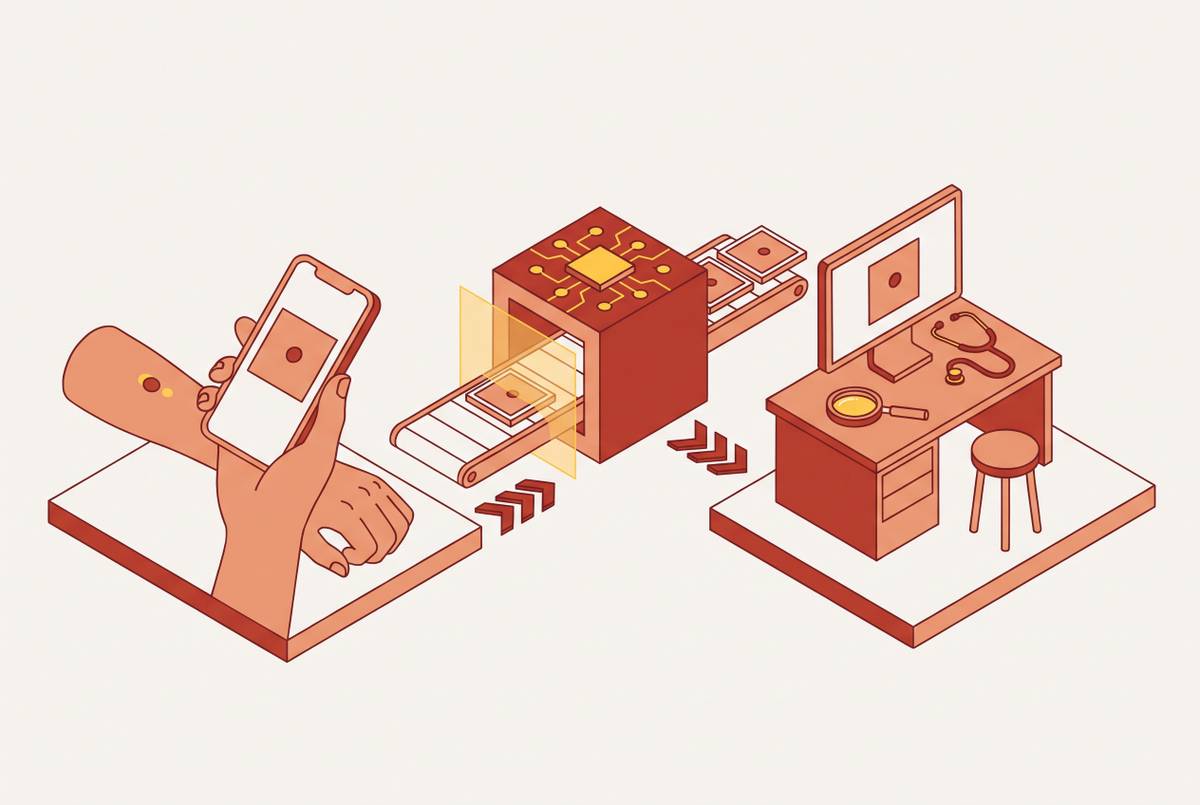
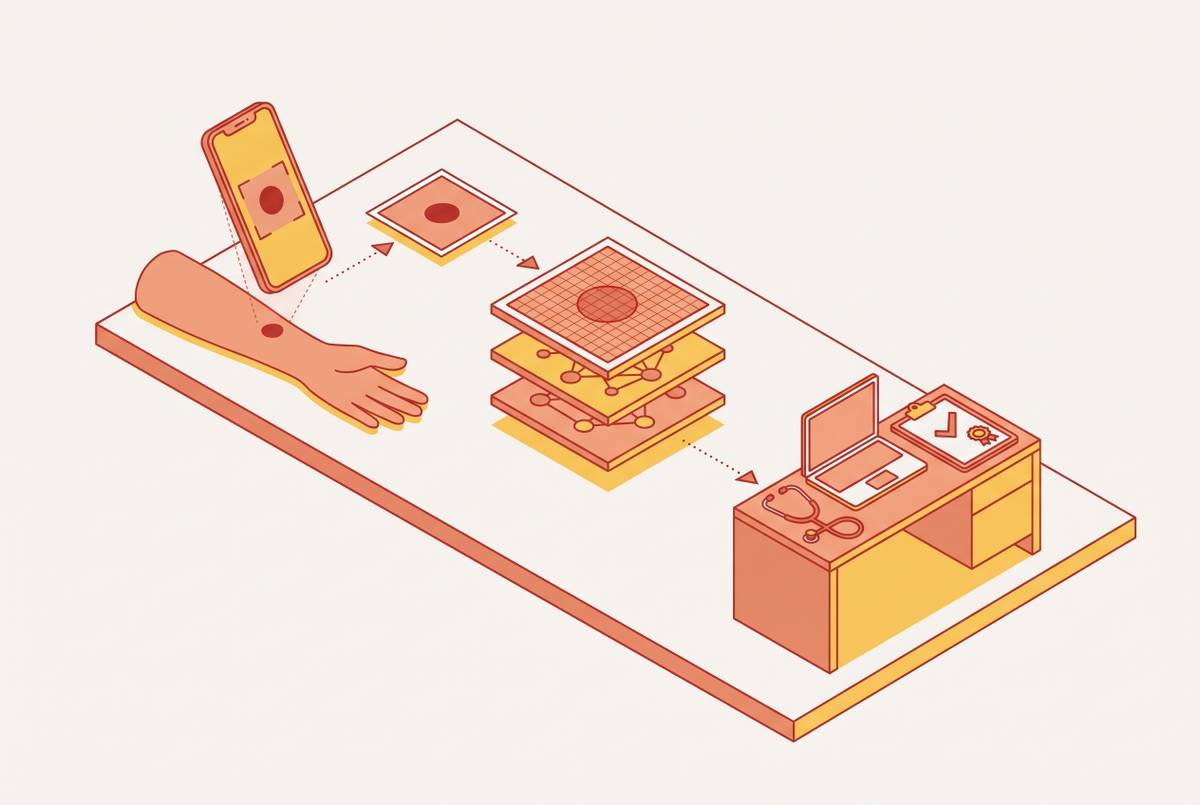
Acne is well suited to bridging that gap because diagnosis relies heavily on visible lesions and patient history. A clinician does not ordinarily need a physical maneuver or a lab test at the point of care to assess a straightforward presentation. Asynchronous consultations, also called store-and-forward consultations, let patients submit information for later review. These assessments routinely return within 24–72 hours rather than requiring a place in a multi-week appointment queue.
How a clinician actually assesses acne through photos
What can a clinician learn from a photograph? Acne produces visible, classifiable lesions, including comedones, papules, pustules, and nodules. These develop through increased sebum production, follicular hyperkeratinization, bacterial proliferation, and inflammation. Their type and distribution help a clinician judge severity and select a drug class.
Image quality is central to that judgment. Store-and-forward review tends to produce higher diagnostic agreement than low-resolution live video, but high-resolution, uncompressed video can perform comparably. The distinction is whether the clinician can see the features needed to make a treatment decision. A live connection is not automatically a clearer view.
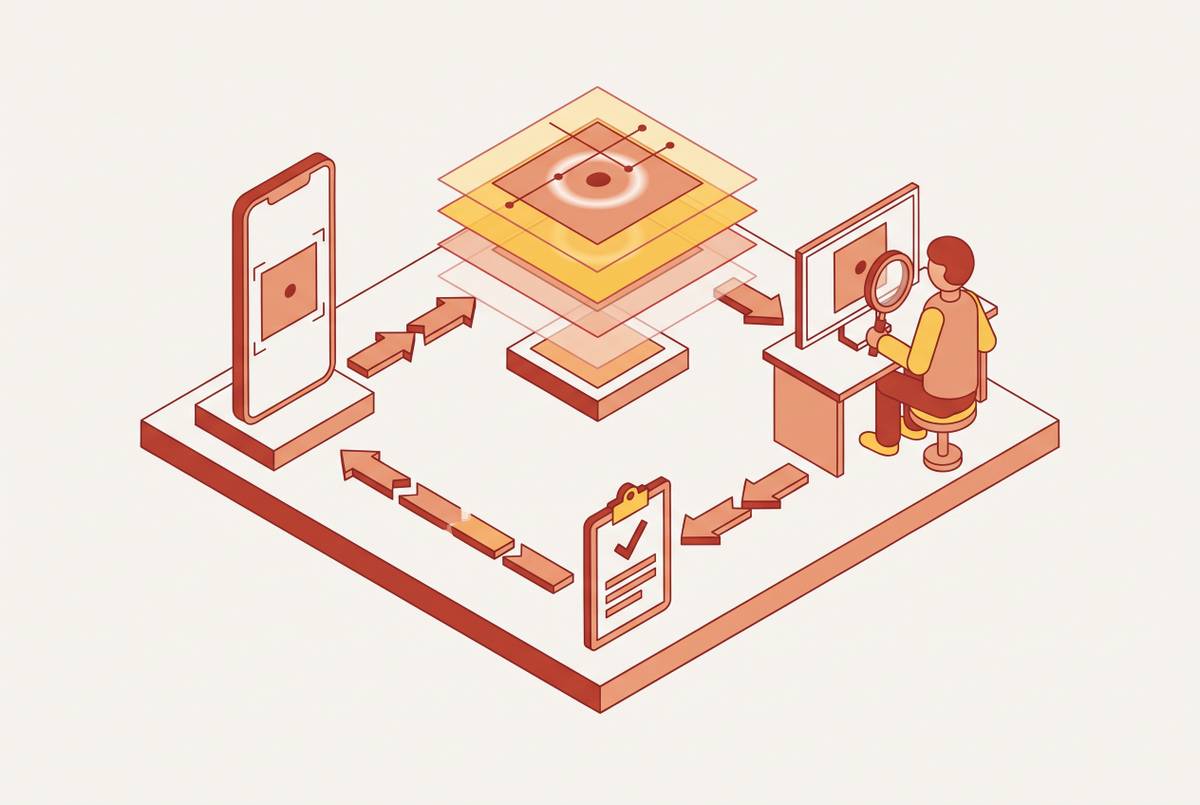
Some platforms also use AI for decision support, flagging parts of an image and sorting the information before a clinician reviews it. The dermatologist’s assessment remains the authoritative clinical decision in that workflow. But even a clear image cannot show palpation findings or all of the skin’s texture, and on its own it says nothing about past treatment. Those limits make the history submitted with the photos a clinical necessity.
What medications online clinicians can and cannot prescribe for acne
The AAD’s 2024 guidelines strongly recommend combination topical therapy and first-line agents including topical retinoids, benzoyl peroxide, and topical or oral antibiotics. These treatments can be prescribed after a video or asynchronous visit when appropriate. Tretinoin and adapalene are both e-prescribable. Tretinoin reduces comedone formation by decreasing how tightly follicular epithelial cells stick together, while adapalene decreases microcomedone formation.
Benzoyl peroxide reduces Propionibacterium acnes through free oxygen radicals and has anti-inflammatory and keratolytic effects. It has no documented drug resistance. Lower-concentration formulations can be as effective as higher ones with fewer side effects. Oral antibiotics such as doxycycline can also be prescribed online, but guidelines recommend pairing them with benzoyl peroxide to reduce antibiotic resistance risk.
The FDA has approved four combination oral contraceptive pills specifically for acne, namely Yaz, Ortho Tri-Cyclen, Estrostep, and Beyaz. These can be prescribed through telehealth when clinically appropriate. Spironolactone, an anti-androgen used off-label for hormonal acne in people who can become pregnant, is also prescribable online. Pregnancy status must be disclosed as part of that assessment.
Isotretinoin has a different route to initiation. It acts on all four pathogenic mechanisms of acne, but the iPLEDGE REMS program requires baseline testing in a medical setting before treatment starts. FDA updates in 2026 allow at-home pregnancy testing during and after therapy with clinician approval, with full implementation set for November 15, 2026. For severe, scarring, or treatment-resistant acne, telehealth can begin assessment and referral, but it cannot make isotretinoin initiation entirely online.
What the intake process actually asks of the patient, and why it matters clinically
A well-prepared intake gives the clinician information that a remote encounter cannot otherwise supply. For patients, this is a way to improve the assessment before the consultation begins. Photos taken from several angles in natural or ring light help show how much of the skin has acne. Close-ups show the lesions, while wider views show where they are on the skin. Including areas that look clear gives context rather than presenting only the most noticeable breakout.
The medication list provides another part of that context. Androgenic hormones, high-progestin birth control pills, systemic corticosteroids, and iodide- or bromide-containing agents can exacerbate acne. Omitting a current medication can therefore leave a clinician working from an incomplete explanation of the symptoms. Contraceptive type is especially important. Combined oral contraceptives with low-androgenic progestins can treat acne, while progestin-only pills may worsen it in some patients.
Treatment history needs more than a product name. The useful account includes each topical or oral treatment tried, how long it was used, and why it was stopped. Without that history, the clinician may suggest something that already failed or caused a reaction. Previous self-treatment with over-the-counter products can also complicate what the photos show. Reporting that history helps distinguish the current appearance from the course that led to it.
Whether a patient is pregnant or uses birth control also affects which treatments are suitable, including whether spironolactone or isotretinoin treatment in the future can be considered. The Society of Family Planning’s 2026 Clinical Recommendation supports using telemedicine to counsel patients about contraceptives and start them on one. An acne consultation and a contraceptive review can therefore appropriately take place in the same encounter.
What the same-week timeline actually looks like, step by step
The process starts with either booking a live visit or submitting an asynchronous consultation. Most platforms have appointments the same day or the next day, while asynchronous services let patients send in their information at any time without booking a conversation. The patient then supplies the symptom history, medication list, treatment history, and photos. Completion speed affects the timeline. An unfinished submission cannot give the clinician the same starting point as a complete one.
Next comes review by a licensed clinician. Depending on the platform, that may be a board-certified dermatologist or another appropriately licensed provider. Asynchronous review often takes 24–48 hours, while a synchronous visit allows the plan to be discussed that day. If a prescription is appropriate, the clinician sends it electronically to the patient’s pharmacy. For topical retinoids and oral antibiotics, that can happen on the day of the visit.
Pharmacy pickup or delivery follows the prescribing decision. Generic first-line medications are widely stocked, including generic adapalene gel and doxycycline, with GoodRx pricing available at most pharmacies. Prescription timing and receipt are separate steps. A same-day clinical decision does not itself mean the medication is already in the patient’s hands.
The sequence can slow when intake is incomplete, state-specific clinician availability is limited, or the presentation needs further questions. The clinician may need clarification before prescribing safely. Cystic acne, new systemic symptoms, or suspected scarring can instead lead to an in-person referral.
How can patients compare affordable online acne prescriptions with fast turnaround?
An affordability comparison needs both a price and a defined service. The available information does not establish a cheapest option for tretinoin or clindamycin, or support a ranked list of low-cost visits. Fast access alone is not enough to establish value. Most telehealth acne platforms use cash-pay or FSA/HSA-eligible models, though some are covered by employer plans. Patients should check coverage before assuming the visit must be paid for entirely out of pocket.
Clinical credentials are the next distinction to examine. A platform may use board-certified dermatologists, primary care physicians, nurse practitioners, or physician assistants, whose scope of practice and prescribing authority vary. “Licensed clinicians” is not a complete description of who provides care. The consultation format also changes the experience. Asynchronous review offers convenience, live visits allow immediate questions, and hybrid services combine the two.
Sesame Care is a broad telehealth marketplace where patients choose from available clinicians, including dermatologists. Same-day appointments and prescriptions are possible, but it does not accept health insurance. A one-time visit does not guarantee continuity. Its Skincare Rx subscription provides ongoing care with a dedicated provider, virtual visits, unlimited messaging, and access to prescriptions and refills.
Ongoing care matters because acne treatment often needs to change at 6–8 weeks. The lesson for patients comparing services is to look beyond the first prescription and check whether messaging or follow-up with the same provider is available. Prescription scope also needs to match the likely treatment. Some platforms do not prescribe isotretinoin at all, which is a separate restriction from its required baseline testing. Knowing the service’s scope before booking can prevent a wasted consultation.
Encrypted, HIPAA-compliant systems are a baseline requirement for handling clinical photographs and medical histories. If AI assists image review or triage, the platform should make the clinician’s role clear. The key safeguard is that a licensed clinician makes and owns the final decision and can override the AI. Automation can help speed up care while the clinician stays responsible for it.
What the evidence says about outcomes and where the clinical limits are honest
Teledermatology evidence supports remote assessment of mild-to-moderate acne, but diagnostic agreement should not be confused with a guarantee of treatment success. Saade et al. (2025) found agreement in the high nineties for acne and rosacea using three ways of taking images. Other studies of acne have found lower agreement, so this finding cannot show how accurate remote assessment is in every case. Acne’s visible lesions help explain why clinicians can assess it well remotely. They do not make every presentation equally clear.
The strongest objection to asynchronous care concerns what images leave out. A patient who has already used unsuitable over-the-counter products may have a history that changes how the clinician interprets the skin. A form can collect that information, but it cannot always replace interactive questioning. Live discussion has a real clinical role. The useful distinction is between a straightforward case with enough information and one that needs further conversation or examination.
The evidence for AI-assisted care has a separate gap. The available literature has not established direct comparisons of patient perspectives on AI-integrated telemedicine in dermatology. Uncertainty about how patients experience the AI-human interface supports transparency about how AI is used.
Severe or cystic acne, new systemic symptoms, and presentations requiring palpation or biopsy belong in an in-person evaluation. Isotretinoin initiation also requires its medical-setting testing step, while complex or treatment-resistant cases may need referral. For mild-to-moderate acne with clear lesions and a complete intake, the evidence shows that same-week care can be clinically sound. For more complex cases, the same access can start the assessment and connect the patient to the in-person care the condition requires.
Sources
- The Use of Teledermatology in the Treatment of Patients With Severe Acne on Isotretinoin
- Telehealth as a Substitute for a Usual Source of Care for Prescription Medications
- Asynchronous Teledermatology Reduces Wait Times and Maintains High Adherence to Standard Care for Lichen Planus: A Retrospective Study