Comedonal Acne Causes and Prescription Treatments
Untreated comedones trigger inflammation inside the follicle long before they become visible.

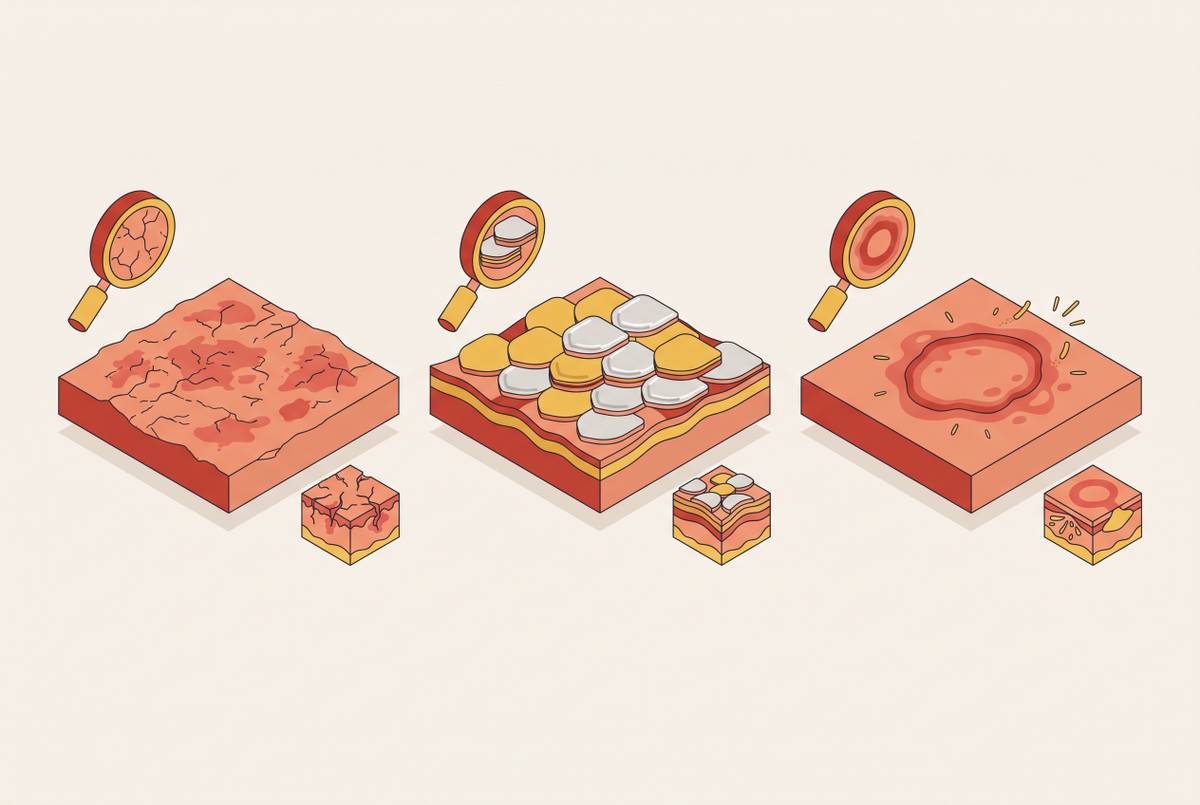
Comedonal acne is a distinct category of acne lesion, defined by a clogged pilosebaceous unit rather than by inflammation. That distinction matters because it changes what the bump looks like and how it should be treated. A comedone matches the surrounding skin tone, carries no pus, and is not tender or swollen to the touch, because nothing inside it is inflamed yet.
Two subtypes make up this category, depending on whether the follicle opening is exposed to air. Closed comedones, known as whiteheads, are plugged follicles still covered by a thin layer of skin, so their contents never reach the surface. Open comedones, known as blackheads, have a widened opening that exposes the plug to air. That air oxidizes the tip of the plug and turns it dark. The color has nothing to do with dirt trapped in the pore.
These lesions cluster where sebaceous glands cluster most densely: the forehead and chin most often, with the nose, cheeks, and back following behind. Cleveland Clinic describes comedonal acne as typically the mildest form of acne on the spectrum, but the material clogging the follicle is physically stuck there rather than sitting on the surface where a cleanser can simply lift it away, making it one of the hardest types to clear.
That combination of mild appearance and stubborn structure means comedonal acne deserves to be understood on its own terms rather than treated as a lesser version of inflamed acne. Left alone, comedonal acne does not necessarily stay mild. It can progress into inflammatory acne, the painful papules and pustules most people picture when they hear the word "acne. Understanding why that progression happens starts with the biology inside the follicle itself.
The four mechanisms that converge to block a follicle

Comedone formation is four processes converging at the same small structure, the pilosebaceous unit, each pushing the follicle closer to a blockage. Treatment only makes sense once these four mechanisms are laid out side by side, because every prescription option on the market is built to interrupt one or more of them.
The first mechanism is sebum overproduction, driven by androgens. Androgens signal the sebaceous gland to make more oil than the follicle can comfortably hold, and that excess sebum becomes the raw material the other three mechanisms act on. This is why comedonal acne tends to flare at specific, predictable points in life: puberty, pregnancy, and the days surrounding the menstrual cycle all involve androgen fluctuations strong enough to push sebum production higher.
The second mechanism is follicular hyperkeratinization. Inside the follicle canal, skin cells called keratinocytes are supposed to shed in an orderly way and clear out. In comedonal acne, that shedding goes wrong: cells clump together instead of sloughing off, and the clump seals the follicle like a cork. This physical plug is the structural piece of the problem that topical retinoids target most directly.
The third mechanism involves Cutibacterium acnes, a bacterium that lives on healthy skin without causing any trouble under normal conditions. Once a follicle is plugged and full of sebum, it becomes a low-oxygen, oil-rich pocket, exactly the environment C. acnes thrives in. Dense colonization in that pocket throws off the local microbial balance and pulls immune cells into the area. The bacterium itself produces enzymes and other molecules that provoke immune cells into releasing proinflammatory signals, and it forms biofilms that push a plugged follicle further toward visible inflammation. The important nuance is that the immune reaction to C. acnes, not the bacterium's mere presence, is what drives a lesion to worsen.
The fourth mechanism is the inflammatory response itself, and this is where the picture of comedonal acne as a quiet, passive stage of disease starts to break down. Research increasingly shows that inflammation sets in early, often while a comedone still looks clinically unremarkable on the surface. The pilosebaceous unit recruits immune cells and shifts its local microenvironment well before a lesion turns red or sore, so the comedone functions as an active immunological event rather than a dormant plug waiting to become a problem later. Both the innate and adaptive arms of the immune system get involved, and when that response doesn't resolve cleanly, the lesion progresses to something visibly inflamed.
Beyond these four, a handful of amplifying factors shape how severe and how persistent comedones become: genetic predisposition, a high glycemic diet, dairy consumption, and broader hormonal imbalances all feed into lesion persistence. Environmental exposures, humidity, pollution, and comedogenic cosmetics interact with those genetic and hormonal factors too. Disruption to the skin's microbiome and ongoing immune dysregulation can keep lesions going even after the initial blockage formed. None of these amplifiers replace the four core mechanisms. They just turn the dial up or down on how aggressively those four play out.
Why comedones are not simply passive blockages
The common assumption is that a comedone sits quietly until bacteria eventually "infect" it and kick off inflammation. The biology doesn't support that sequence. Immune and microbial activity begin inside the comedone from early on, long before any lesion is visibly inflamed.
Inside what's called a microcomedone, C. acnes multiplies in a specific layer of the follicle, the infra-infundibulum. As keratin builds up in that confined space, the resulting low-oxygen environment appears to favor both bacterial growth and lipid accumulation at the same time, feeding the very conditions that let the bacteria thrive further.
One detail changes how this should be read clinically: the strains of C. acnes found in acne lesions, phylotypes IA1 and IC, are genetically distinct from the strains found on healthy skin. The shift is a qualitative change in which community of bacteria is present, a shift in composition rather than simple volume.
And the driver of damage isn't the bacterium acting alone. The host's own immune response to C. acnes is what pushes a microcomedone toward becoming a visible, inflamed lesion. The follicle's contents provoke the body's defenses, and those defenses are what do the damage that shows up on the skin later.
That has a direct consequence for how comedonal acne should be approached in practice. Waiting until a comedone turns red or tender before treating it means acting after immune activation has already begun inside the follicle. Intervening at the follicular level, before any inflammation is visible on the surface, is where first-line agents like topical retinoids do their most effective work. Watchful waiting, in other words, has a real biological cost.
Known triggers and risk factors that accelerate comedone formation
The risk factors behind comedonal acne aren't scattered or random. Each one traces back to one of the four mechanisms already laid out, which makes them both predictable and, in a number of cases, something a person can actually modify.
Hormonal triggers deserve the most attention here, because they set up the treatment conversation that follows later. Excess or fluctuating androgens during puberty or pregnancy push sebum production higher, feeding directly into mechanism one. Adult female acne, in particular, is increasingly recognized as hormonally driven, and it presents on the lower face and along the jawline, differently from adolescent acne.
Structural and product-related triggers matter too. Picking or popping existing comedones damages the follicle and pore structure, which raises the odds of further obstruction down the line rather than resolving anything. Oily or greasy skincare and cosmetic products introduce comedogenic material straight into the follicle, adding to the sebum already sitting there.
Diet and genetics round out the picture. Dairy, added sugars, and certain dietary fats, particularly saturated and trans fats, carry an association with higher acne risk, and diets high on the glycemic index are specifically implicated in that pattern. Genetics shape how intensely the pilosebaceous unit responds to androgen signaling and to microbial colonization in the first place, which is part of why two people exposed to the same triggers can end up with very different skin. A family history of acne is itself a recognized risk factor, independent of diet or current hormone levels.
How topical retinoids address comedone formation
Topical retinoids are the backbone of comedonal acne treatment for a specific reason: they go straight after follicular hyperkeratinization, the structural plug described as mechanism two. Rather than treating a comedone after it forms, retinoids normalize how keratinocytes shed inside the follicle canal in the first place, keeping the plug from forming.
Adapalene and tretinoin both do this job, normalizing follicular desquamation, but they differ in potency and tolerability. Tretinoin accelerates skin cell turnover more aggressively and carries a longer track record of evidence behind it. That strength comes with a tradeoff: higher rates of initial irritation, dryness, and sun sensitivity compared to adapalene.
Guidelines reflect that tradeoff directly. The current European EuroGuiDerm guideline gives topical retinoids a medium-strength recommendation for comedonal acne, while another national dermatology guideline rates topical retinoids overall as a strong recommendation. Within the European guideline specifically, adapalene is preferred over both tretinoin and topical isotretinoin, and that preference rests on comparative tolerability rather than any suggestion that adapalene works less well.
It helps to be clear about what retinoids are not doing. They aren't primarily attacking C. acnes, and they aren't reducing sebum volume in any major way. Their effect is upstream, at the level of the keratinocyte, where they stop the plug from forming rather than clearing one that's already there. That mechanism also explains why retinoids take time: visible improvement appears over weeks, not days, so setting realistic expectations at the start of treatment matters as much as the prescription itself.
What benzoyl peroxide and azelaic acid add to treatment
Comedone formation runs on four mechanisms working at once, so a treatment plan built around only one of them, hyperkeratinization, leaves sebum composition, microbial activity, and inflammation unaddressed. That gap is the scientific case for combining agents rather than relying on a single one.
Benzoyl peroxide fills part of that gap. It works as an antimicrobial and a mild comedolytic, cutting down C. acnes load through oxidative activity while also contributing, in a smaller way, to unclogging follicles directly. Current guidelines recommend benzoyl peroxide for comedonal acne, though with a lower strength of recommendation than topical retinoids carry for purely comedonal presentations. Benzoyl peroxide also plays a role that extends past comedonal acne on its own. Pairing it with topical or oral antibiotics prevents C. acnes from developing antibiotic resistance, a protective function that holds even when antibiotics are added later for acne that mixes comedonal and inflammatory lesions.
Retinoids address the structural plug at mechanism two, acting before a lesion ever becomes visible. Benzoyl peroxide works on the microbial side, addressing mechanism three, and backs up antibiotic therapy when it's needed for more extensive disease. Neither one, used by itself, reaches every mechanism driving the lesion. Used together, they reach more of the biology at once, which is the core reason combination therapy tends to outperform any single agent working alone against comedonal acne.
Sources
- SAS Journal of Medicine From Comedones to Scars
- Comedonal Acne: Causes & Treatment
- EuroGuiDerm Guideline for the Treatment of Acne
- The Microbiome in Comedonal Contents of Inflammatory Acne Vulgaris is Composed of an Overgrowth of Cutibacterium Spp. and Other Cutaneous Microorganisms - PMC
- A systematic review to evaluate the efficacy of azelaic acid in the management of acne, rosacea, melasma and skin aging - King - 2023 - Journal of Cosmetic Dermatology - Wiley Online Library
- Safety and Efficacy of Fixed-Dose Combination of Adapalene and Benzoyl Peroxide in Acne Vulgaris Treatment: A Systematic Review of Clinical Trials