Salicylic Acid vs Glycolic Acid for Acne-Prone Skin
Salicylic acid treats clogs; glycolic acid treats what's left behind.
Acne rarely resolves on its own. Salicylic acid and glycolic acid are among the most widely used over-the-counter acne ingredients, but they work through different mechanisms entirely, and picking the wrong one is a common reason routines stall. Understanding what each acid actually does inside the skin, not just what the label promises, is the fastest way to stop guessing.
Why acne-prone skin keeps fighting the same battles
Acne is not a teenage condition that adults occasionally relapse into. It affects more than 20% of the global population over age 16, and a large share of that burden falls on adult women whose skin doesn't match the oily-adolescent-skin assumption baked into most drugstore treatment.
Hormonal cycling drives part of it. The bigger issue might be structural: most over-the-counter acne products are formulated for thicker, oilier adolescent skin, while adults tend to develop drier, more reactive skin over time. Treating the two the same way makes one of them lose.
What is happening inside a clogged pore
Acne starts inside a structure called the pilosebaceous follicle, not on the surface of the skin. That single fact explains why some treatments barely touch certain lesions, no matter how religiously they're applied. If a product never reaches the follicle, it was never going to solve a follicle problem.
Four things converge to create a breakout:
- Excess sebum production, which feeds bacteria and clogs the follicle opening
- Follicular hyperkeratinization, where dead skin cells fail to shed properly and pile up instead
- Proliferation of Cutibacterium acnes inside the follicle
- Inflammation, the body's response once the first three conditions are in place
Before any of that becomes a visible bump, there's a microcomedo, a tiny impaction inside the follicle that predates the blemish you actually see. Everything downstream (whitehead, blackhead, papule, pustule) starts there.
Lesion type determines which ingredient makes sense. A closed comedone (whitehead) is a fully blocked follicle with no surface opening. An open comedone (blackhead) is the same plug, oxidized and darkened at the surface. A papule is a raised, solid lesion without pus. A pustule is inflamed and filled with pus, the active infection stage. Notice that two of these four are still forming below the surface. That's the detail most routines miss.
How salicylic acid works: oil-solubility as the core advantage
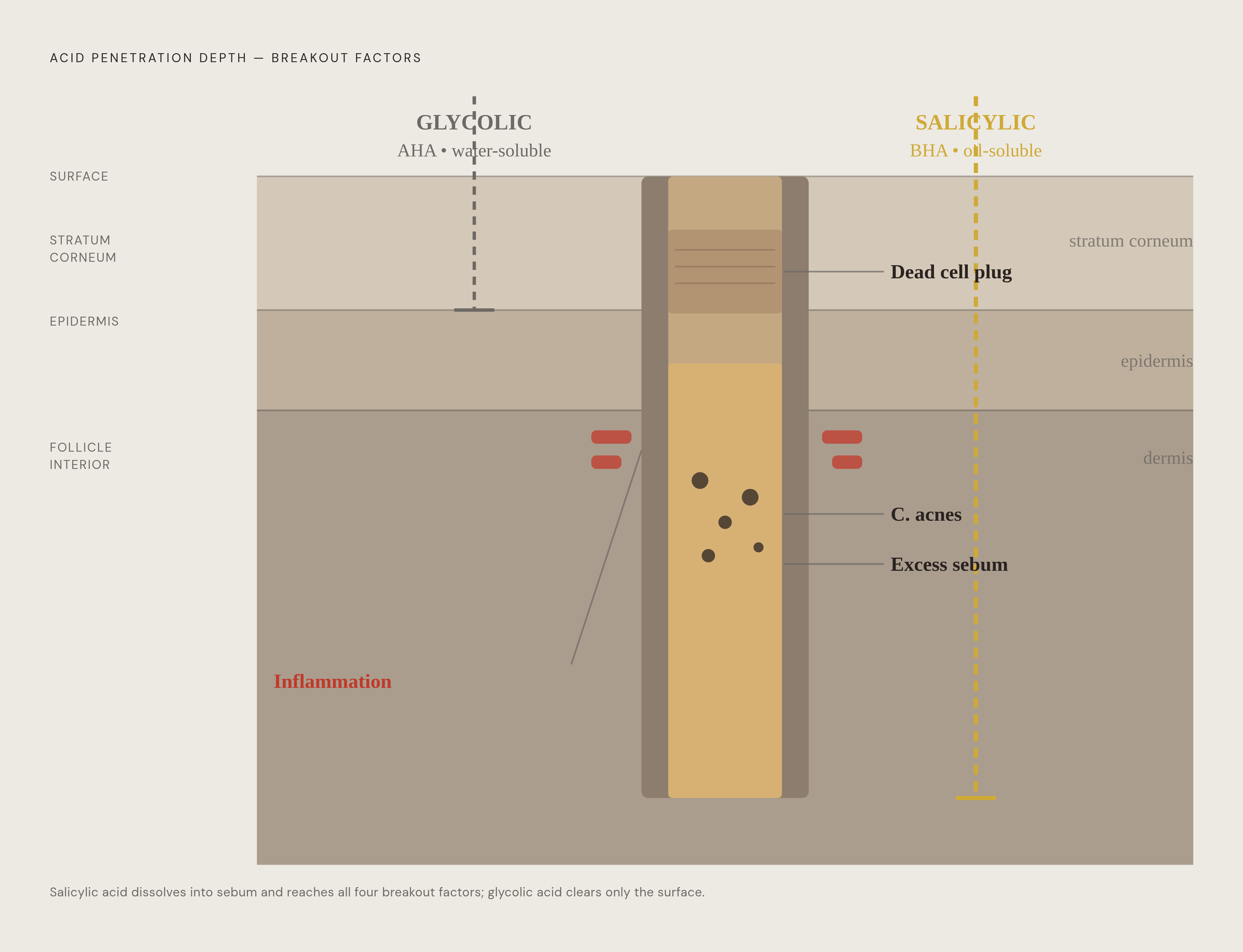
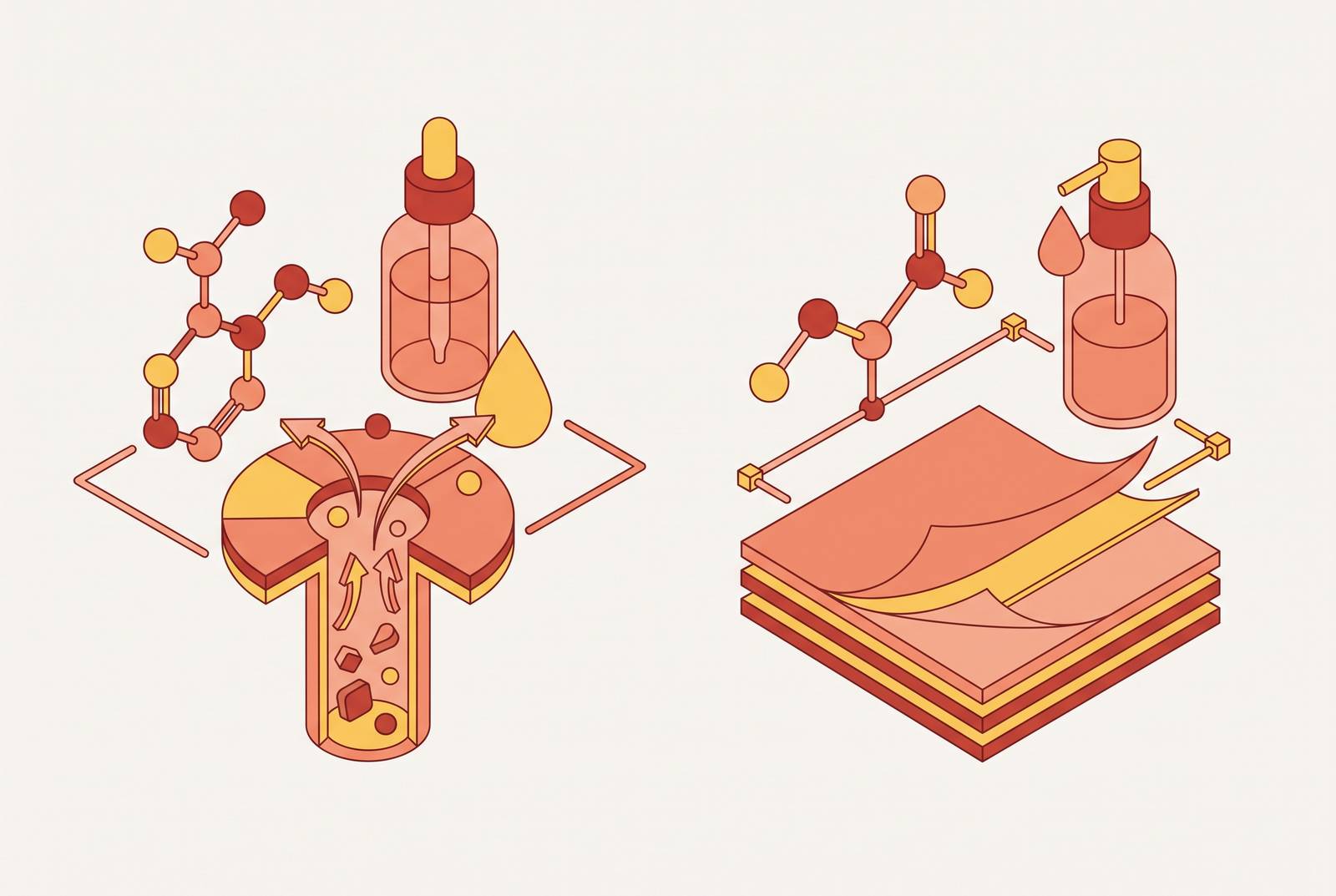
Salicylic acid is a beta hydroxy acid, or BHA. The "beta" refers to where the hydroxyl group sits relative to the carboxyl group in its chemical structure, but that positioning isn't what makes it useful on skin. The real driver is the aromatic benzene ring attached to the molecule, which makes salicylic acid oil-soluble.
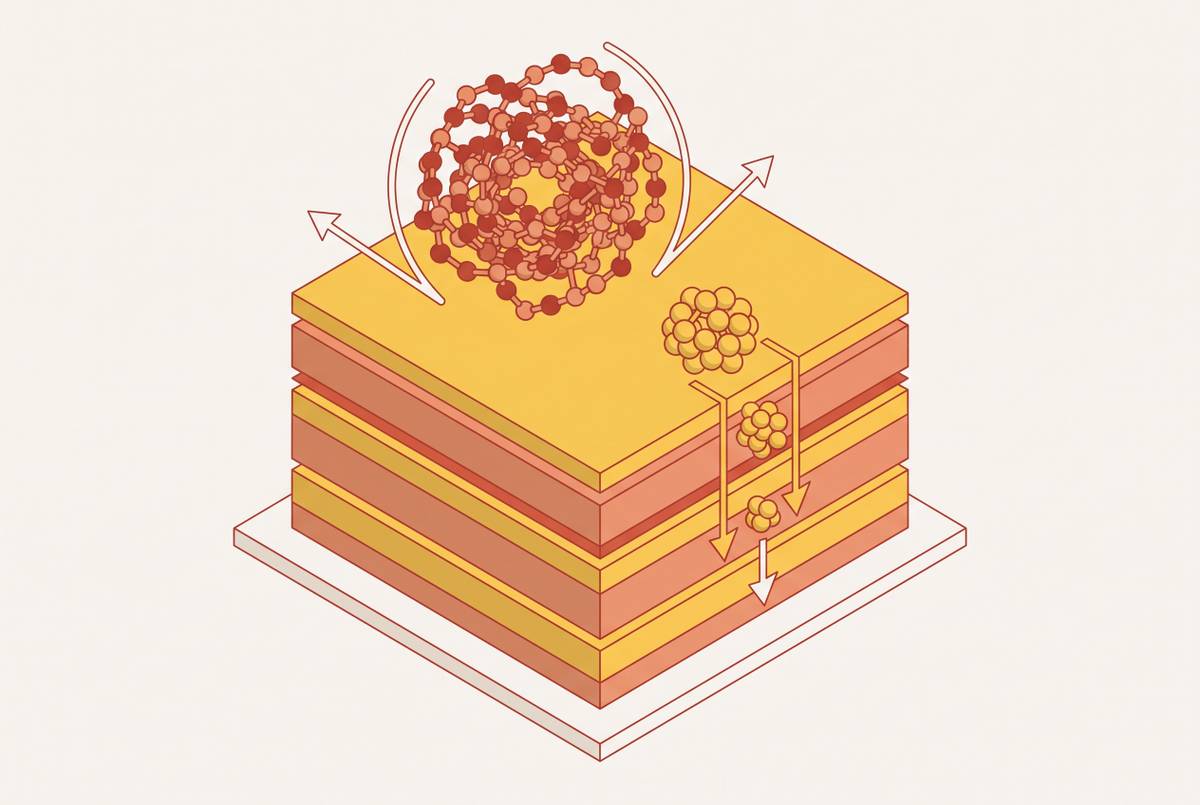
That one property changes everything downstream. Sebum is oil. A water-soluble acid can sit on top of an oily, clogged pore for hours and never actually get inside it. Salicylic acid dissolves into the sebum itself and travels down into the follicle, reaching an environment that surface-acting ingredients simply cannot enter.
Once it's inside, three things happen. It loosens the adhesion between dead skin cells (keratolytic action), which stops the buildup that forms a microcomedo before it starts. It inhibits the COX enzyme, cutting prostaglandin synthesis, the same pathway aspirin (acetylsalicylic acid) works through. Inflamed lesions tend to calm faster with salicylic acid in the routine as a result. And it acts on the follicular environment where C. acnes proliferates.
Those three factors together make the use case obvious: comedonal acne, blackheads, whiteheads, clogged pores, is salicylic acid's home turf. Inflammatory lesions benefit too, but through the COX pathway, not through pore penetration alone. Anyone treating a pustule with salicylic acid and expecting purely mechanical unclogging is only getting half the story.
How glycolic acid works: surface exfoliation
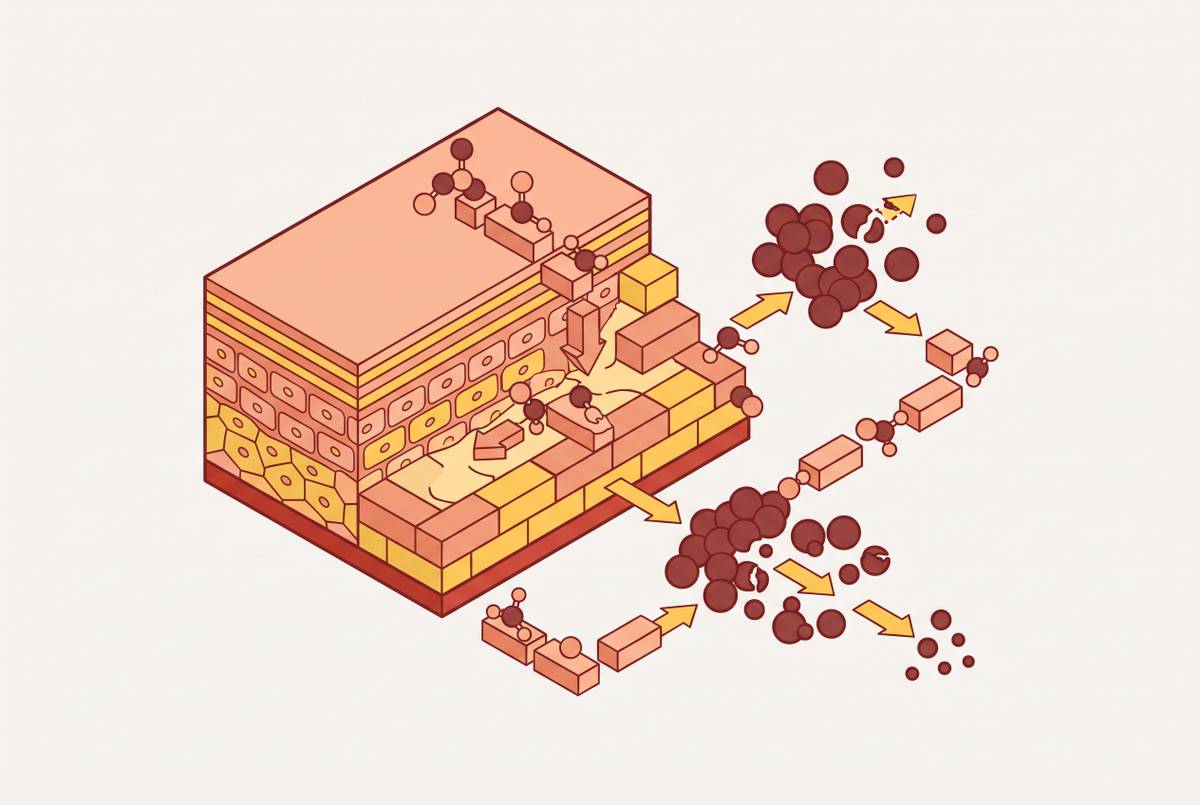
Glycolic acid belongs to a different family: the alpha hydroxy acids, or AHAs. It's water-soluble, so it stays at and near the surface of the skin. It doesn't dissolve into sebum, and it doesn't travel into the follicle the way salicylic acid does. That's just a different tool. It's just a different tool.
It happens to be the smallest molecule among the AHAs, which gives it unusually strong penetration for a surface acid. But smallest still means surface. Glycolic acid can work deep into the stratum corneum, the outermost layer of skin, without ever reaching the oil-filled environment where comedones actually form.
Mechanically, it dissolves desmosomes, the protein bonds holding dead skin cells together, which speeds up cell turnover and reveals smoother skin underneath. It also stimulates collagen production, something salicylic acid doesn't do. That is why glycolic acid shows up constantly in anti-aging formulas rather than acne-specific ones.
So if glycolic acid never enters the follicle, what is it actually doing in an acne routine? It's cleaning up what the clog leaves behind, not the clog itself.
What the clinical head-to-head data shows
A dermatology journal study compared a 30% salicylic acid peel against a 50% glycolic acid peel in patients with mild-to-moderate acne vulgaris. Both peels produced meaningful reductions in lesion counts. Neither one failed.
But the salicylic acid group showed a faster drop in inflammatory lesions specifically, consistent with its known anti-inflammatory properties. The mechanism is visible in the outcome, not just the theory.
The study's conclusion was measured: both acids are effective and safe for mild-to-moderate acne at peel concentrations, and salicylic acid has an edge when active inflammatory lesions are the target. The 30% and 50% figures are professional peel concentrations, far above what is in a drugstore cleanser or serum. This data tells you about relative mechanism, not about which bottle to buy off a shelf.
Post-inflammatory hyperpigmentation: where glycolic acid earns its place in an acne routine
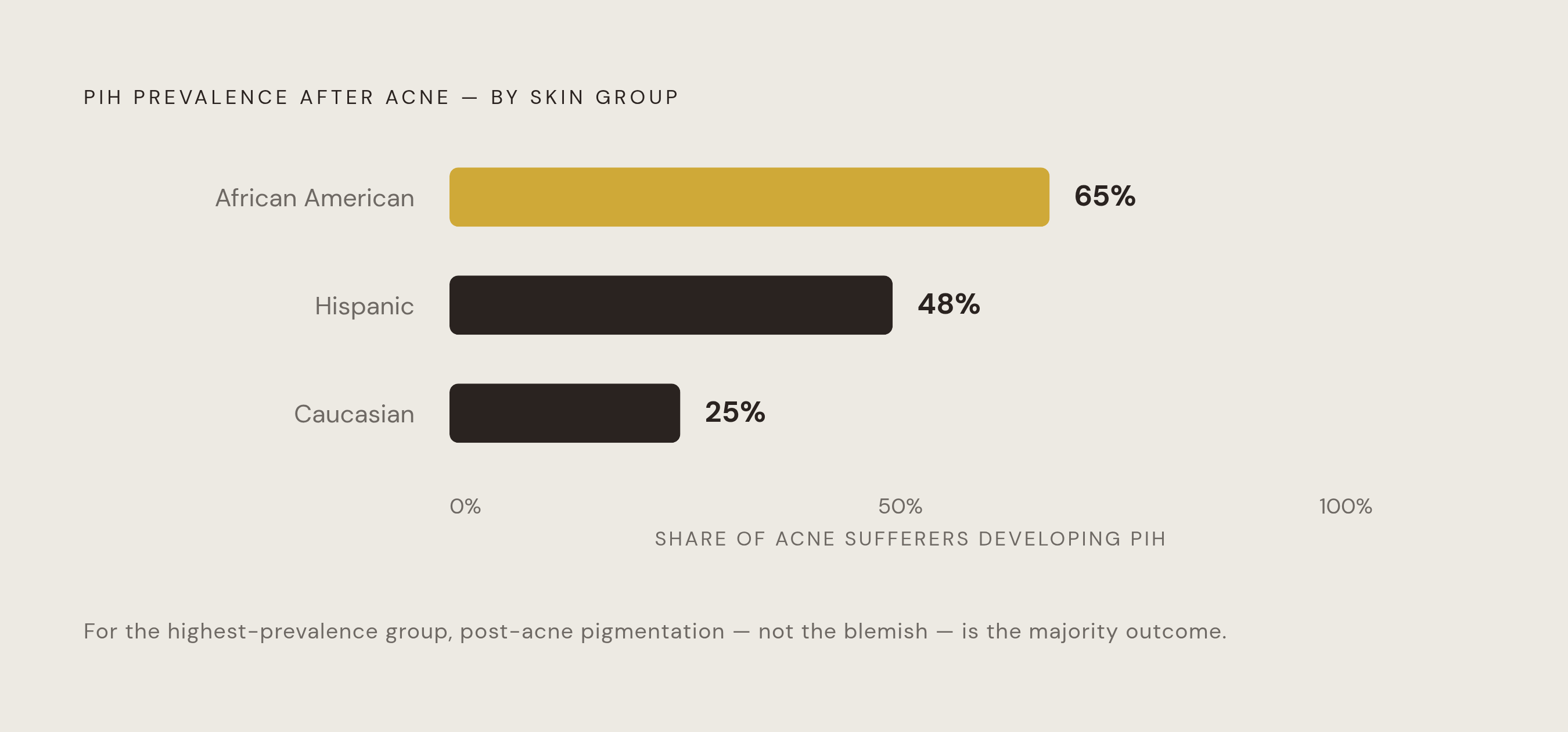
Post-inflammatory hyperpigmentation, or PIH, is the dark mark left behind after a blemish heals. It's not a vanity complaint, and it doesn't take severe acne to trigger it. Even a mild breakout can leave a mark that lingers for months.
The scale here changes how seriously it should be treated. PIH prevalence after acne runs at 65% in African American subjects, 48% in Hispanic subjects, and 25% in Caucasian subjects. For a large share of people who deal with acne, the pigmentation left behind becomes the dominant, lasting problem, often more disruptive day to day than the blemish that caused it.
Once PIH sets in, it tends to be slow and stubborn to fade, which makes early intervention worth more than late correction. Because early treatment matters more than fixing PIH after it sets in, glycolic acid's surface-only action becomes exactly the right tool. In one protocol, an 8% glycolic acid cream applied nightly, paired with periodic glycolic acid peels, produced a measurable reduction in pigmentation. Surface exfoliation works because the problem, in this case, actually lives on the surface.
Matching the right acid to your specific concern
What mattered was which problem sat in front of you. The two mechanisms solve different problems.
Reach for salicylic acid when blackheads and whiteheads are the main complaint and follicular penetration is what the situation calls for. It also makes sense on oily or combination-oily skin, since oil-solubility works with the skin's own chemistry instead of fighting it. Active papules and pustules respond to its anti-inflammatory action directly at the lesion. And for prevention, its comedolytic action disrupts the microcomedo before it ever becomes visible.
Reach for glycolic acid once skin is past the breakout stage and dealing with lingering dark marks or uneven tone. It also earns its place when texture, not congestion, is the complaint: rough or dull skin without active clogged pores. Dry or normal skin types tend to do better with it, since salicylic acid's oil-reducing effect can dry things out further on skin that isn't oily to begin with. And if fine lines and firmness are on the list alongside acne, collagen stimulation is a benefit salicylic acid simply can't offer.
As rough shorthand: salicylic acid suits oily, acne-prone skin, and glycolic acid suits dry, aging, or pigmentation-prone skin. Combination skin doesn't need to pick a side. It can run both, just not in the same spot, and not without a plan.
Using both acids without irritating your skin barrier
Both of these are exfoliants, and that overlap is exactly where people get into trouble. Stacking them carelessly causes over-exfoliation: dryness, redness, a compromised barrier, and, ironically, more breakouts, since damaged skin mounts its own inflammatory response.
Start conservative. Glycolic acid used a few times a week is a reasonable starting point, building up only as skin proves it can tolerate more. Salicylic acid can be used more frequently, depending on how skin responds over the first few weeks.
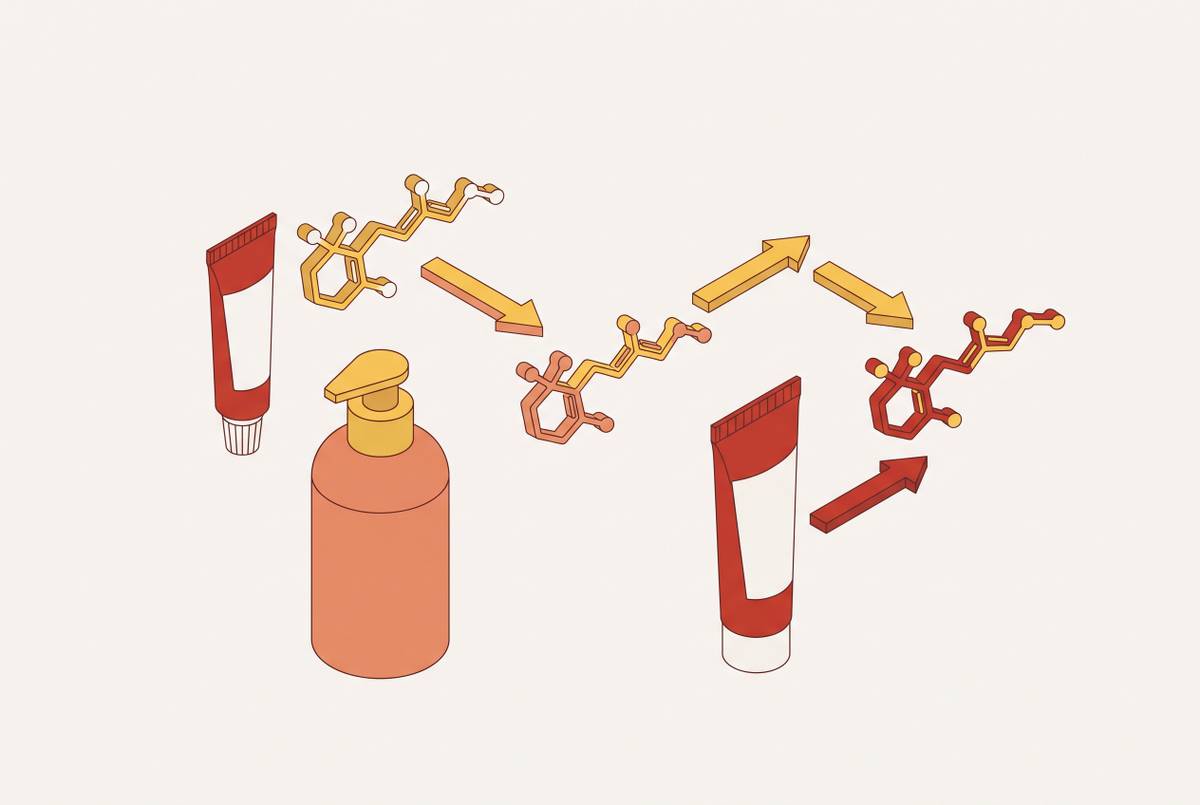
A few ways to run both without them colliding. Alternate by day: salicylic acid on weekdays, glycolic acid once or twice on weekends, so total acid exposure stays in check. Separate by format: a salicylic acid cleanser, wash-off and lower-contact, paired with a glycolic acid toner or serum that stays on skin longer. Zone by skin type: salicylic acid on the T-zone and breakout-prone areas, glycolic acid on drier or more pigmented patches. And if both go on in the same session, applying them in sequence rather than mixing them helps manage total acid exposure.
Moisturizer and SPF are the basics that make the rest of this possible. Moisturizer supports the barrier both acids are actively thinning, and SPF isn't optional, since exfoliating acids can leave skin more vulnerable to sun damage. Skipping either one erases the exfoliation gains through sun damage or a broken barrier within weeks.
The point at which a clinician should be part of the decision
Over-the-counter salicylic acid and glycolic acid cover a real and meaningful range of acne cases. They were never built to cover everything, and that ceiling should be stated directly rather than glossed over on a product label.
Moderate-to-severe inflammatory acne is often beyond what a cleanser or serum can resolve alone. Hormonal acne that cycles predictably with a menstrual pattern usually needs an intervention aimed at the hormonal driver. PIH that doesn't respond to consistent glycolic acid use over a reasonable stretch is a signal to act on. Switching products every few weeks and hoping for a different outcome isn't a strategy.
At that point, a dermatologist is the next logical step. It's the next logical step, the same way the mechanisms above explain why these acids work when they do: they also explain exactly where that work runs out.