Niacinamide Mechanisms for Barrier Repair and Hyperpigmentation
One molecule triggers two separate skin repairs through a single metabolic pathway.
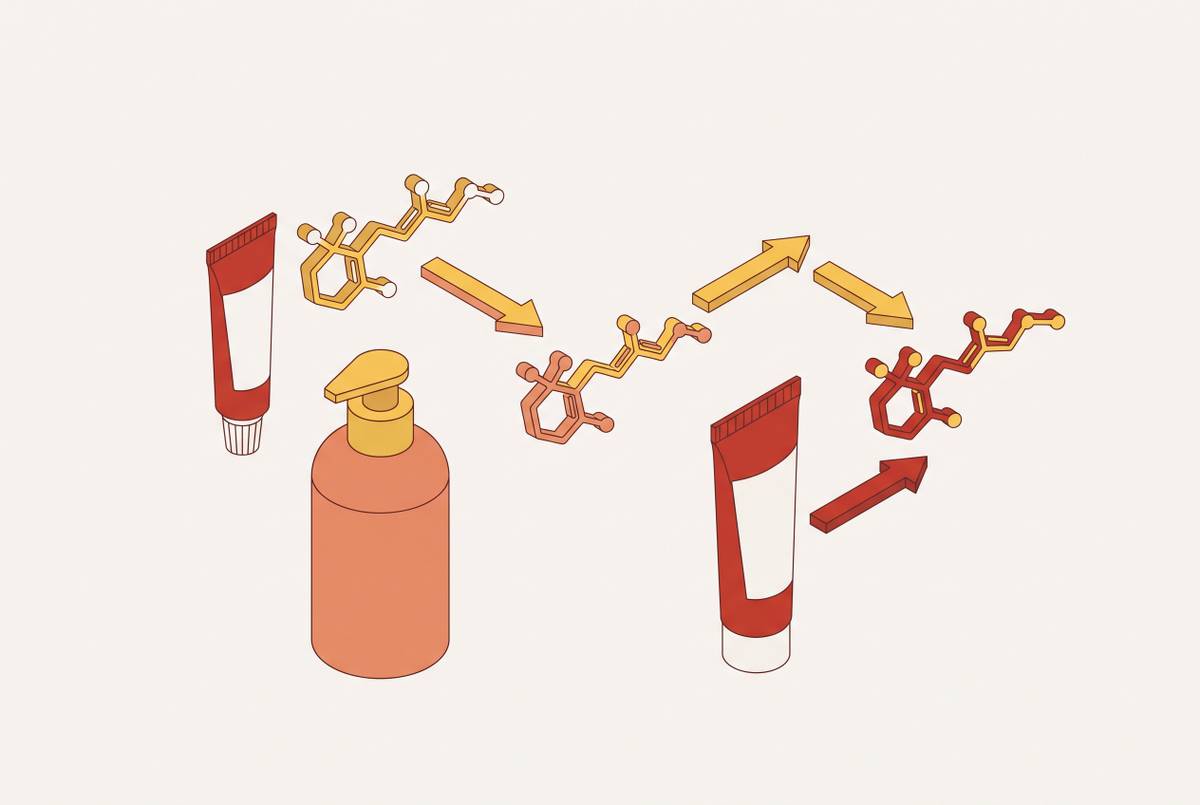
Niacinamide does two separate jobs in skin, not one job wearing two hats. It rebuilds the barrier by feeding ceramide production, and it calms hyperpigmentation by blocking how pigment moves, not how much of it gets made. Both effects trace back to the same starting point: a water-soluble form of vitamin B3, also called nicotinamide, that keratinocytes convert into NAD⁺ once it's absorbed. That single conversion step is why one small, stable molecule can do so much. A recent review by Marques, Hadjab, Porcello, et al. and a 2026 literature review in Cosmoderma both treat niacinamide as one of the more thoroughly studied ingredients in topical dermatology, and the mechanism work behind it explains why.
How a healthy skin barrier breaks down
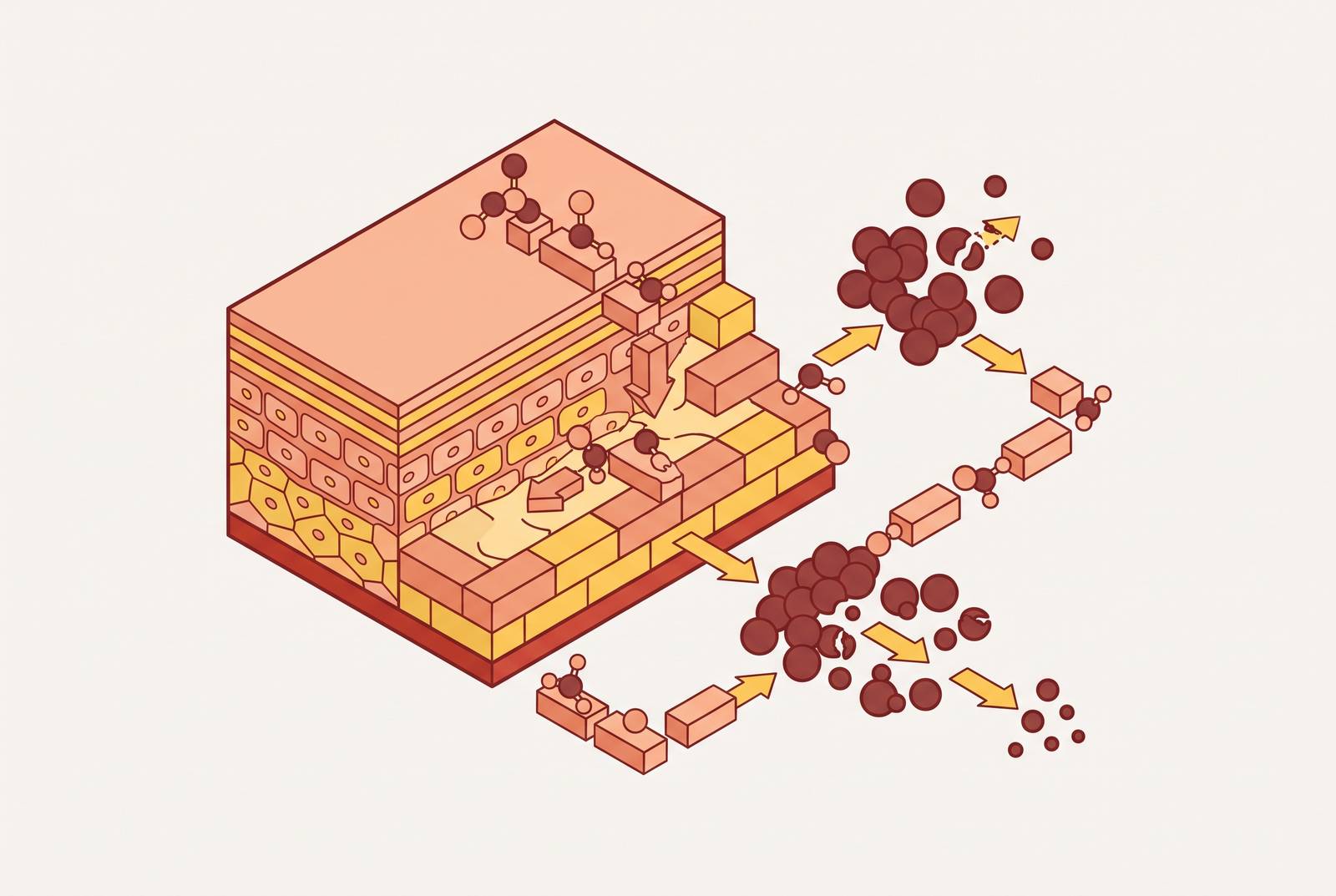
Picture the outer layer of skin as a brick wall. Corneocytes, which are flattened, dead keratinocytes, are the bricks. Ceramides, cholesterol, and free fatty acids fill the gaps between them as the mortar. When that mortar is intact, skin holds onto water, keeps irritants out, and stays calm. It feels plump. It feels resilient. That's the whole point of the barrier: it's a wall, not a filter.
When the mortar thins out, water escapes faster than skin can replace it, a shift measured clinically as transepidermal water loss, or TEWL. Skin can feel dry even while it's producing extra oil to compensate, which confuses a lot of people trying to read their own skin. Irritants also get in more easily once the wall has gaps, causing redness, stinging, or a sudden reactivity to products that used to sit just fine. Harsh cleansing, over-exfoliating, UV exposure, and cold, low-humidity air all wear down that mortar over time.
Age doesn't help. Ceramide production slows as skin gets older, and once the barrier is already compromised, ceramides get lost faster than the skin can rebuild them. The gap widens instead of closing on its own.
Niacinamide's role in rebuilding the barrier through ceramide synthesis and lipid upregulation
Here's the mechanism, step by step. Topical niacinamide gets absorbed into keratinocytes and converted into NAD⁺. Rising NAD⁺ levels turn on enzymes that drive the synthesis of ceramides, cholesterol, and free fatty acids, the same three lipids that make up the mortar. Those lipids then organize themselves into layered sheets, called lamellar layers, that reinforce the stratum corneum from the inside.
The numbers back this up, though not with one tidy figure. Across studies, ceramide levels rose somewhere between 34% and 67% after four weeks of use. That's a wide range, and it should be: trial design, skin type, and baseline barrier condition all vary, so a single average would flatten out real differences between studies rather than clarify them.
A 2025 study using X-ray diffraction methods looked at what niacinamide actually does to the structure of the stratum corneum. It found structural changes in the stratum corneum consistent with improved flexibility and water handling across varying humidity conditions. Niacinamide itself isn't hygroscopic and doesn't pull water in the way glycerin does. The effect is structural.
Clinical trial data on TEWL make the case even more concretely. In a 122-patient trial involving atopic dermatitis, published through naturalhealthresearch.org, TEWL measurements on day 28 came in at 17.4 (±4.82) and 16.10 (±7.30) across the two treatment groups, versus 21.2 (±9.47) in the control group (P<0.05). That's not a subtle difference, and it's happening in a population where barrier failure is the actual disease, not just a cosmetic complaint.
How niacinamide reduces hyperpigmentation by interrupting melanosome transfer
Melanocytes make melanin and package it into small units called melanosomes. Those melanosomes then get handed off to surrounding keratinocytes, and it's that handoff where niacinamide steps in.
Research by Hakozaki and colleagues found that niacinamide inhibits melanosome transfer by somewhere between 35% and 68% in co-culture models, with a matching reduction in visible skin pigmentation in clinical use. Over the treatment period, treated skin showed measurably less hyperpigmentation compared to a vehicle-only control. That's a meaningful clinical result.
What sets this mechanism apart is what it doesn't do. Niacinamide doesn't bleach skin, and it doesn't shut down melanin production. It interrupts delivery, leaving the pigment-producing cells untouched. That distinction is why dermatologists treating skin of color reach for it so often: no depigmentation risk, no rebound pigmentation once treatment stops, no irritation cascade that tends to follow harsher lightening agents.
A second pathway, separate from transfer inhibition, matters here. For post-inflammatory hyperpigmentation, or PIH, niacinamide's anti-inflammatory action addresses the trigger itself, the inflammation that provoked the extra pigment in the first place, alongside the dark mark that inflammation left behind. That dual action matters most for acne-prone skin and darker phototypes, where PIH is often the primary complaint driving someone to treatment.
Clinical trial findings on niacinamide versus hydroquinone for melasma and PIH
One of the more useful trials here put niacinamide and hydroquinone head-to-head on the same faces. Twenty-seven melasma patients received 4% niacinamide cream on one side of the face and 4% hydroquinone on the other, for eight weeks, with sunscreen used throughout by everyone in the study. Both sides improved. Colorimetric measurements found no statistically significant difference between the two.
But the finer breakdown tells a more textured story. Good-to-excellent improvement was reported in 44% of patients on the niacinamide side versus 55% on the hydroquinone side, so hydroquinone still edges ahead on raw efficacy. Side effects, though, ran in the opposite direction: 18% with niacinamide versus 29% with hydroquinone. For anyone managing melasma over months or years rather than weeks, the tolerability gap matters as much as the efficacy number does.
A separate 2025 investigator-blind trial looked at 60 women, ages 20 to 50, with facial melasma. One group used a serum combining niacinamide, tranexamic acid, vitamin C, and a hydroxy acid for five months. The other group used 4% hydroquinone as their primary treatment before transitioning to the niacinamide-based serum. Both groups showed significant pigment reduction after three months (p < 0.001), and the hydroquinone group reported a higher erythema score along the way. That points to niacinamide-based serums as a legitimate standalone or sequential option.
PIH in skin of color gets its own body of evidence. A study by Passeron and colleagues, used an investigator-blinded, randomized, intra-individual design to test a broad-spectrum sunscreen containing niacinamide against PIH triggered by combined UV and visible light exposure plus inflammatory stimuli, in participants with darker phototypes. The sunscreen mitigated PIH from both the light exposure and the inflammation. That's a preventive finding, not just a treatment one: visible light is an underappreciated driver of PIH, and most standard sunscreens aren't formulated to touch the oxidative and inflammatory pathways that niacinamide reaches.
So where does that leave the comparison with hydroquinone? Niacinamide isn't faster. The evidence points to comparable efficacy with a meaningfully better side-effect profile, which is a real advantage, just not the same as outright superiority. For melasma that's severe or resistant to standard treatment, combination approaches involving prescription retinoids or azelaic acid may still be the more realistic path.
How concentration shapes what niacinamide does in practice
Concentration is where a lot of product claims fall apart under scrutiny. Below 2%, niacinamide's effects lean cosmetic rather than therapeutic, and that concentration range is not where the strongest evidence for either barrier or pigment correction sits. Ceramide upregulation, interestingly, has been documented at 2% on its own, so barrier support kicks in at a lower threshold than pigment correction does.
Between 2% and 5% is the range with the most consistent evidence for barrier repair and general anti-aging benefits. Clinical studies in that band show measurable improvement in visible aging signs.
For hyperpigmentation specifically, the strongest evidence is at 4% to 5%. At 4%, niacinamide performs comparably to hydroquinone, as the head-to-head trial above showed. At 5%, the dose-dependent effect on dark spots and uneven tone becomes more pronounced.
Skin of color changes the calculus slightly. Trial data suggest lower concentrations, in the 2% to 3% range, are effective enough on their own, while keeping irritation risk down, a genuine consideration for patients who are simultaneously trying to avoid triggering more PIH through the treatment itself.
How to identify which problem niacinamide is being asked to solve
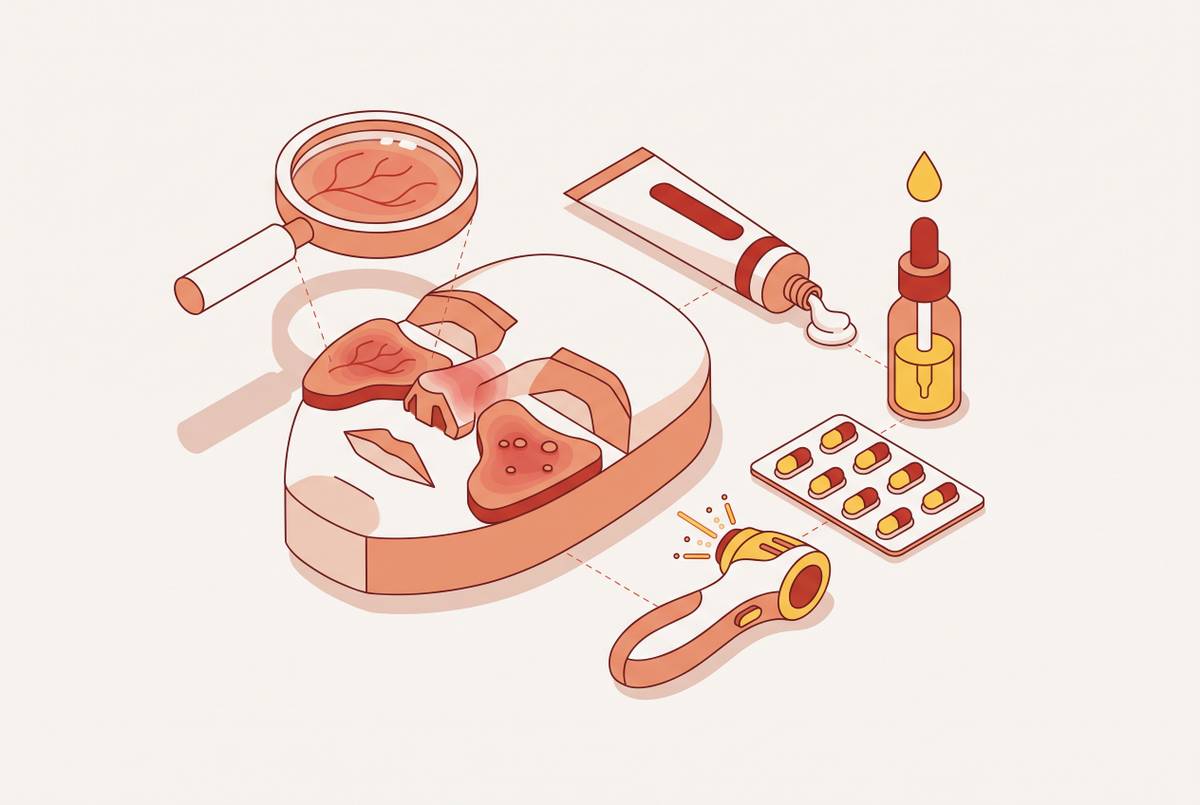
Barrier dysfunction and hyperpigmentation don't feel or look the same, and telling them apart changes what to expect from treatment. So how does someone actually tell which one they're dealing with?
Barrier trouble tends to announce itself through touch and sensation more than appearance. Skin feels tight, rough, or reactive. Moisturizer stings going on, even a product that used to feel fine. Redness appears without an obvious trigger. Products that were tolerated for months suddenly aren't. None of that points to pigment. It points to a wall with holes in it.
Hyperpigmentation reads differently, and the pattern of it actually tells you what kind you're looking at. Discrete dark spots that show up after a breakout or a scrape, varying in size and location, usually point to PIH, which niacinamide addresses on two fronts: the inflammation behind it and the pigment mark it left. Symmetrical patches on the cheeks, upper lip, or forehead that show up alongside a hormonal shift, pregnancy, oral contraceptives, hormone replacement therapy, are more likely melasma. Niacinamide still has a role there, but the hormonal driver needs its own attention too. General dullness or uneven tone spread across the whole face, without a clear inflammatory or hormonal trigger, usually points to photoaging, where niacinamide paired with daily SPF is a reasonable first move.
Melasma's connection to estrogen and progesterone explains a pattern a lot of people notice but don't name. It's why melasma is sometimes called the "mask of pregnancy," and why it tends to appear or worsen with oral contraceptive use. Treating the pigment without addressing what's driving the hormonal fluctuation tends to produce results that don't hold.
When describing symptoms to a provider, three details do most of the work: whether the discomfort is spread across the face or localized to specific spots (barrier versus pigment), when the marks first appeared and whether they followed a breakout or a hormonal event, and whether the pattern is symmetrical. Those three answers show whether niacinamide alone is a reasonable plan or whether it needs to sit alongside prescription hydroquinone, a retinoid, or azelaic acid to actually move the needle.
Sources
- Niacinamide efficacy in skin therapy: The multitasking marvel for glowing skin – A comprehensive literature review
- Niacinamide in dermatology: A multifunctional agent for anti-ageing and skin barrier support
- Repairing Your Skin Barrier with Niacinamide: A Guide
- Niacinamide and its impact on stratum corneum hydration and structure | Scientific Reports
- ncbi.nlm.nih.gov
- semanticscholar.org
- researchgate.net
- tandfonline.com