Perioral Dermatitis Triggers and Prescription Treatment
Identify the triggers and prescription strategies that stop this chronic facial rash.
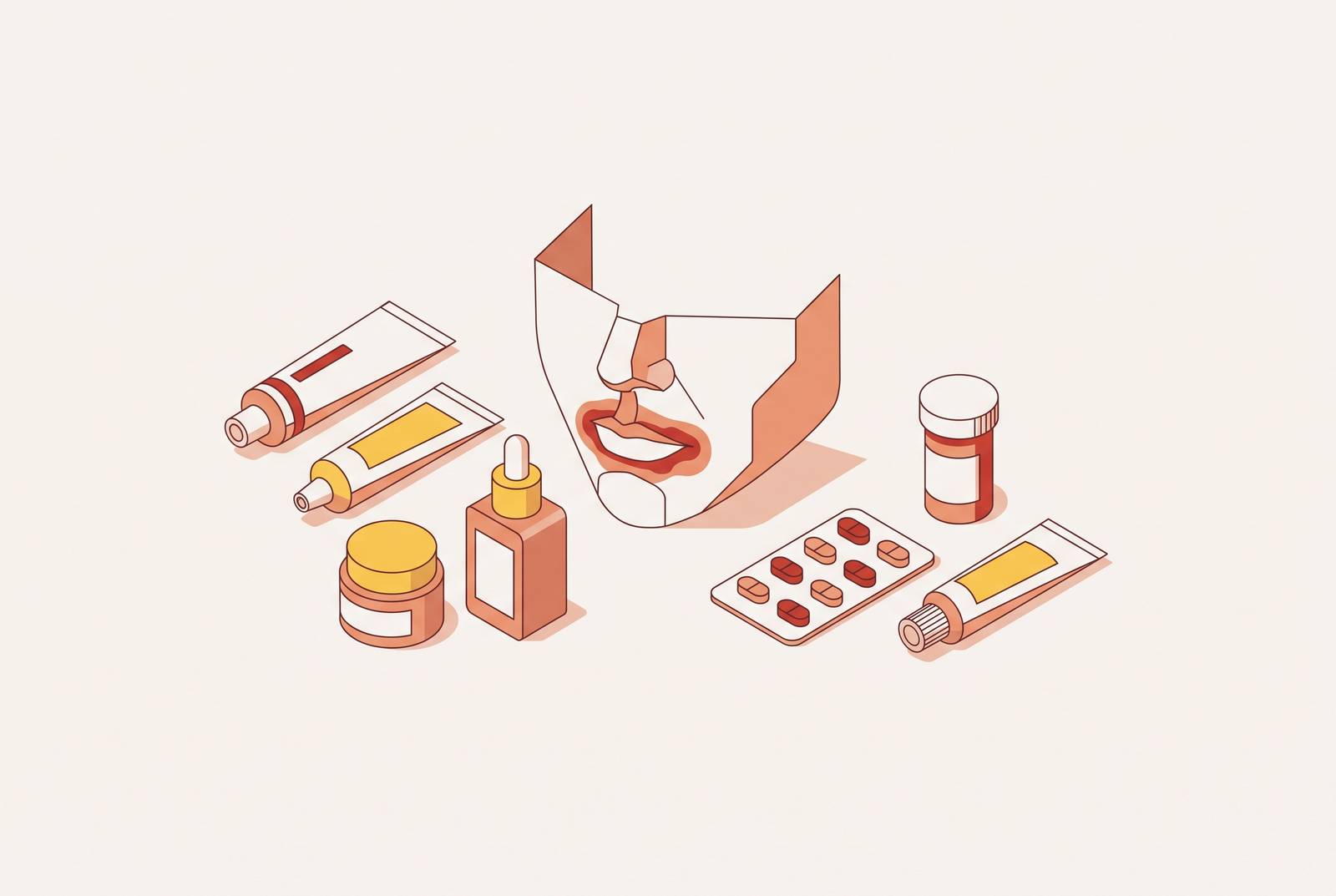
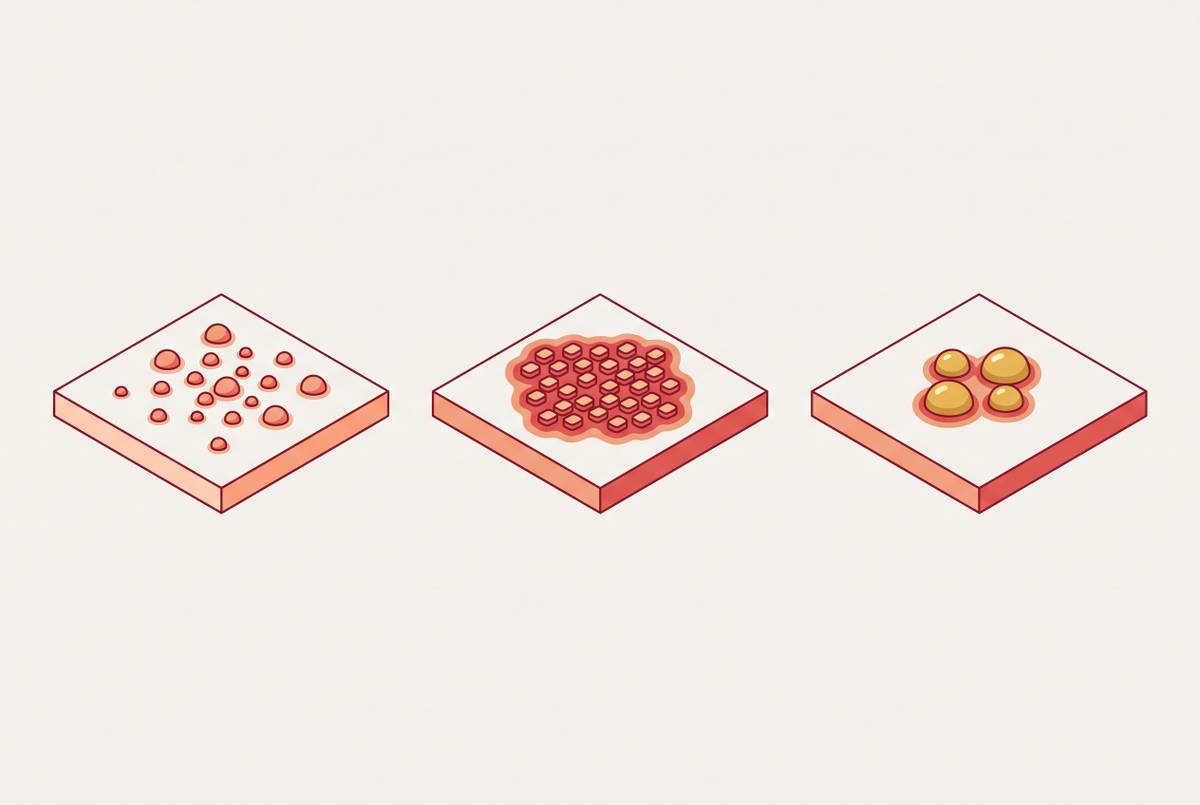
Perioral dermatitis is a chronic inflammatory rash that shows up around the mouth, often as small red bumps or fluid-filled papules that never come to a head and cannot be popped or extracted. The pattern is usually bilateral, though it can show up on just one side of the face, and it sometimes extends around the eyes or nose as well. Patients describe a burning, stinging, or itching sensation, and the redness can linger for months even after the bumps themselves have cleared. The condition is not contagious and has no known link to any underlying systemic disease, though it tends to be chronic and prone to flaring back up.
The perioral distribution is what sets this condition apart, but that distinguishing feature gets missed constantly in practice. Published literature identifies perioral dermatitis as commonly misdiagnosed as eczema, seborrheic dermatitis, rosacea, and acne, four conditions that share a passing resemblance but call for very different care. That overlap matters because the standard treatments for those four conditions, particularly topical steroids used for eczema and seborrheic dermatitis, can actively worsen perioral dermatitis. Roughly 90% of cases occur in women, most commonly between the ages of 16 and 45, with men and children affected at far lower rates. A young woman who gets told she has eczema or mild rosacea, then hands a steroid cream, has just been pointed toward the exact mechanism that keeps this condition going.
Why the etiology is still unsettled
Patients searching for a single cause of perioral dermatitis will not find one in the medical literature, because none has been confirmed. Researchers have discussed a possible role for microbial factors, including Fusobacterium species, Candida albicans, and Demodex folliculorum, the skin mite implicated in several inflammatory facial conditions. None of these has been established as a definitive cause. What the research does point to consistently is impaired barrier function in the skin, a breakdown that lets trigger exposure and microbial overgrowth feed each other. That is why heavy creams and layered skincare routines carry more than cosmetic significance here. They are mechanically involved in how the condition takes hold and persists.
Hormones come up often in patient questions, and the connection is plausible without being primary. Some women notice the rash worsens in the days before a period, and oral contraceptives have been linked to onset in some cases. But perioral dermatitis is not thought to be driven by hormones the way acne is, and patients looking for a hormonal explanation may be reaching for a tidier story than the evidence supports. What does that mean for someone trying to figure out why this happened to them? It means the more useful question is not "what caused this" but "what is feeding this," since triggers can be identified and removed even when a root cause cannot be named. That reframing is the actual clinical strategy, not a consolation prize.
The trigger landscape: what the evidence identifies as provoking factors
If a single cause cannot be pinned down, the practical path forward is mapping out what makes the condition worse, and the evidence here is substantial. Skincare product load sits at the top of the list. A 2025 updated scoping review found facial mineral sunscreen, whitening toothpaste, moisturizer, and foundation implicated in up to 63% of cases where corticosteroids were not the primary driver. That is a striking number, and it points directly at the instinct many people have when their skin looks irritated: reach for more product. Heavy moisturizers and rich, occlusive creams, including those built on petroleum jelly or paraffin, seal irritants against the skin and interfere with barrier repair rather than supporting it.
Oral care products deserve a look too. Fluoride compounds, flavoring agents like carvone and menthol, and certain preservatives in toothpaste have been flagged as potential triggers, either through direct irritation or allergic sensitization in people prone to it. Environmental exposure plays a role as well. Strong wind and UV light are documented triggers, and sunscreen formulation matters quite a bit: a liquid, gel, or light milk formula tends to sit better on reactive skin than a heavy mineral sunscreen. Hormonal and pharmacological factors round out the list, including oral contraceptives and, as recent case documentation shows, certain topical acne treatments. Microbial contributors, Demodex folliculorum, Fusobacterium species, and Candida albicans, remain under active investigation, and the Demodex connection in particular has direct bearing on why certain prescription treatments are proving effective. One trigger belongs in its own category, because of how often it appears and how counterintuitive its effect is: topical corticosteroids, covered next.
The steroid trap: how topical corticosteroids create a dependency cycle
Published literature notes that topical corticosteroid use on the face commonly precedes the appearance of perioral dermatitis, which puts steroids in an unusual position: they function as both a trigger for the condition and the thing patients reach for to treat it. A patient with early redness or irritation applies a steroid cream because it works, fast. The rash calms down within days. Then the cream runs out, or gets tapered, and the rash comes back worse than before. That rebound reads as proof the condition is returning or worsening on its own, so the patient reapplies the steroid, and the cycle locks in.
This is the predictable result of how corticosteroids act on inflamed skin, with the condition itself setting the trap. Patients with prior topical steroid treatment show significantly higher Demodex mite prevalence and density compared to patients without that history, and compared to healthy controls, suggesting steroid use changes the skin environment in ways that let microbial activity expand. That finding reframes the whole cycle: the steroid is not simply failing to fix the problem. It may be actively feeding the condition it appears to be calming.
Stopping topical steroids in a patient with perioral dermatitis is clinical consensus, not an overly cautious suggestion. Some clinicians use a low-potency steroid for a short, controlled period to wean a patient off a higher-potency one they have already been using, as a supervised clinical maneuver rather than a loophole. That approach belongs in a clinician's hands, not as a general green light for steroid use in this condition. What follows from all of this is a hard truth patients need going in: resolving perioral dermatitis usually means tolerating a period where the rash gets worse before it gets better. That is why going through it with clinical support, rather than alone, changes how manageable that stretch feels.
Newly documented triggers: clascoterone and the expanding list of acne treatments that can provoke POD
Corticosteroids are not the only prescription treatments capable of triggering perioral dermatitis, and the list of culprits is still growing. A 2025 case report in JAAD Case Reports documented a 25-year-old woman with polycystic ovary syndrome whose acne had been well controlled on a combined oral contraceptive. She switched to a levonorgestrel IUD and started topical clascoterone 1% (marketed as Winlevi, from Sun Pharma) twice daily for her acne. New-onset perioral dermatitis developed within 7 weeks.
Clinicians discontinued the clascoterone and started her on low-dose isotretinoin with topical tacrolimus, and her dermatitis resolved. The exact mechanism connecting clascoterone to perioral dermatitis has not been fully worked out, but the drug acts by competitively blocking dihydrotestosterone from binding to androgen receptors in the skin, and that disruption to the pilosebaceous unit around the mouth may play a role. What should a patient or clinician take from one case report? Caution, not alarm. Anyone who develops a new perioral rash while on an acne treatment, including newer antiandrogenic topicals like clascoterone, should have perioral dermatitis considered as a possible explanation, rather than simply escalating the acne regimen in response to a rash that is not acne.
Zero Therapy": The First Step Before Any Prescription
Before any prescription enters the conversation, the first real intervention in perioral dermatitis is subtraction. Clinicians call this "zero therapy": patients discontinue cosmetics, heavy skincare, and topical corticosteroids, and most cases improve substantially once that trigger load is removed. Published evidence supports this as the first step, ahead of any medication.
In practice, zero therapy means stopping facial creams, foundation, and multi-step skincare routines, switching to a non-fluoridated toothpaste, and discontinuing topical steroids under a clinician's guidance so the rebound period can be managed rather than endured blindly. What replaces all of that is close to nothing: a very gentle, non-occlusive routine, minimal by design, rather than an elaborate sensitive-skin regimen built around soothing serums and barrier creams. That runs against instinct. A face that is red, stinging, and breaking out feels like it needs more care, more product, more soothing. But that instinct is often what sustains the condition, since the products reached for in a flare tend to be exactly the occlusive, heavily formulated ones the trigger landscape flags as problems.
For patients who catch the condition early and commit to zero therapy along with trigger elimination, that alone may be enough to resolve it without ever needing a prescription. That is a meaningful thing to understand going into a consultation, because it explains why a clinician might hold off on medication at a first visit rather than reaching for one immediately.
The prescription treatment ladder: what clinicians prescribe, for whom, and in what order
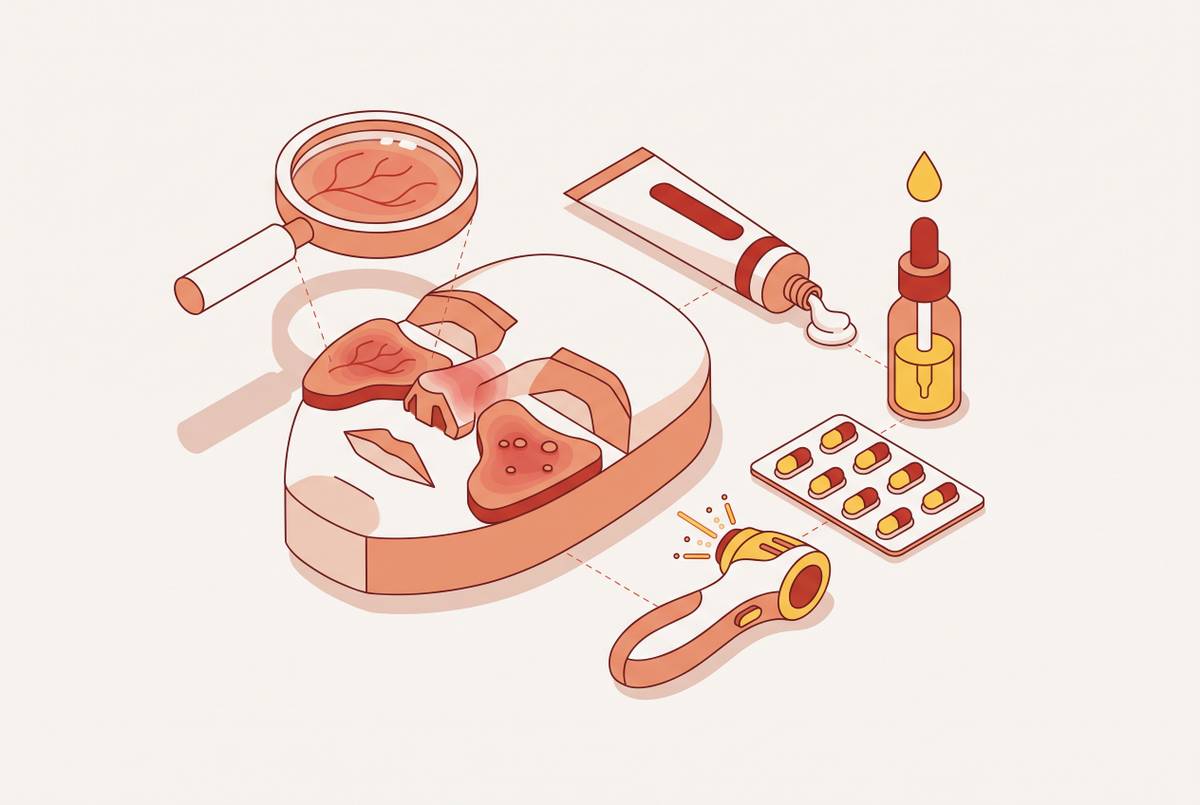
When zero therapy is not enough on its own, treatment follows a rough ladder based on how severe the condition is, though the evidence behind each rung is thinner than most patients expect. No drug carries regulatory approval specifically for periorificial dermatitis. Every pharmacological option in use is prescribed off-label. A systematic review using the GRADE framework found the overall evidence consists of low and very low certainty evidence for the outcomes that matter most to patients. That should shape expectations around how confidently a clinician can predict results, not discourage anyone from pursuing treatment.
For mild disease, topical options come first. Metronidazole gel or cream, applied once or twice daily, is a standard starting point. Azelaic acid gel is another option, though trial evidence suggests it may produce no measurable change in physician- or patient-reported severity after six weeks. Topical calcineurin inhibitors, pimecrolimus 1% cream and tacrolimus among them, are favored by many clinicians because they do not carry the rebound risk that steroids do, and they are an established choice for mild-to-moderate disease. Most guidelines still list topical antibiotics like metronidazole and clindamycin, along with azelaic acid, as first-line, even though the evidence of benefit across these options is modest.
Moderate-to-severe disease typically moves to oral antibiotics. Oral tetracyclines are considered first-line off-label therapy once topical treatment is not enough: tetracycline at 250 to 500 mg twice daily, or doxycycline at 50 to 100 mg daily, usually for 4 to 8 weeks. Minocycline is used in this same class. Children present a specific exception. Oral erythromycin is preferred for children under roughly 8 to 10 years old, because tetracyclines can stain permanent teeth that are still developing.
For disease that resists multiple rounds of topical and systemic therapy, isotretinoin has produced remission in some patients. One documented case involved a 45-year-old woman with recalcitrant perioral dermatitis that had not responded to ivermectin-based topical regimens, calcineurin inhibitors, compounded anti-inflammatory formulations, or repeated courses of doxycycline. She achieved complete remission on oral isotretinoin, with disease control sustained afterward on a low-dose maintenance regimen. That outcome matters for patients who have cycled through several treatments without success. It suggests resistant cases are not necessarily untreatable, just further along the ladder than most people start.
Topical ivermectin and the Demodex hypothesis: an emerging prescription option
Topical ivermectin has emerged as a treatment option grounded directly in the microbial side of this condition's biology. Ivermectin has both anti-inflammatory and anti-parasitic action, and its relevance to perioral dermatitis follows from the Demodex connection raised earlier: patients with a history of topical steroid use show higher Demodex mite density, and that population stands to benefit most from a treatment targeting that specific mechanism. For a patient who developed perioral dermatitis after steroid use, and whose case may involve an elevated mite burden as a result, topical ivermectin offers a treatment rationale that lines up with what is actually happening on the skin rather than treating the rash as a generic inflammatory process.
That mechanistic logic does not mean ivermectin is positioned as a universal fix. It sits within the same off-label landscape as every other pharmacological option covered here, chosen based on a patient's specific history and presentation rather than applied as a default first step. What it represents is something larger than one more entry on a treatment list: active, ongoing investigation into the biology of a condition that, for decades, has been managed more by trial and error than by a clear understanding of what drives it. Patients living with perioral dermatitis are not just working from an old, fixed playbook. The treatment landscape is still being written, one case report and one scoping review at a time.
Sources
- Perioral dermatitis secondary to topical clascoterone 1%
- Topical ivermectin 10 mg/g cream alone or in combination with oral doxycycline for patients with perioral dermatitis (POD): A retrospective case series
- Periorificial dermatitis: An updated scoping review of therapeutic evidence - ScienceDirect
- Pediatric periorificial dermatitis in an Asian population: A comparative study of oral metronidazole and oral macrolides