Why Skin Tags Form and What Makes Them Grow
Friction triggers skin tags, but insulin resistance determines how many you'll grow.
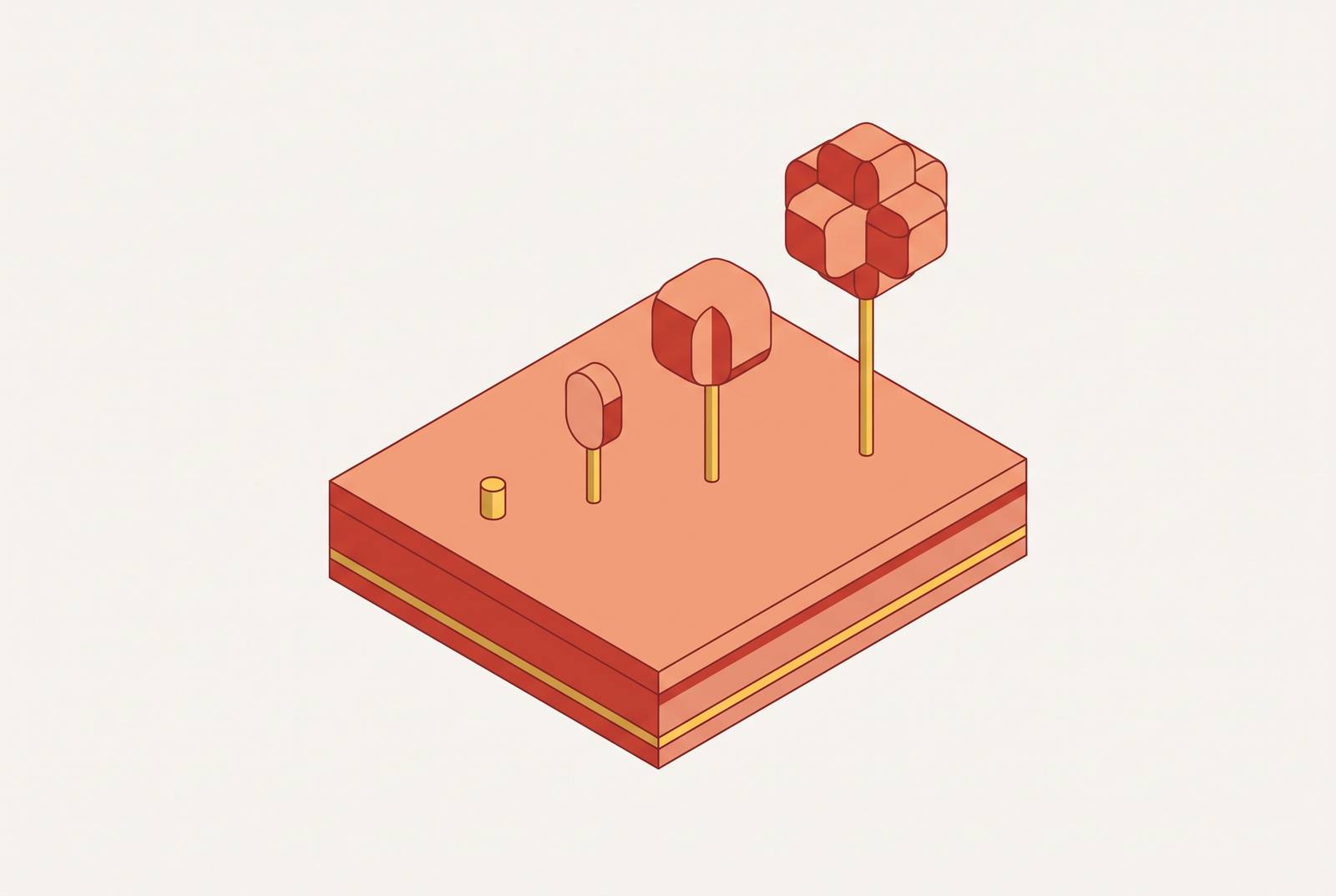
Skin tags form where mechanical rubbing meets internal biology, and which one matters more depends on the person. Doctors call them acrochordons, a term worth knowing so it doesn't sound like jargon the next time a dermatologist says it. Structurally, they're about as simple as skin growths get: collagen fibers and a few small blood vessels sit inside a little pouch of epidermis, the whole thing hanging off the skin by a thin stalk.
Most are flesh-colored or just a shade darker, soft to the touch, and small, usually somewhere between 1 millimeter and a centimeter across, though a few grow bigger than that biologyinsights.com. They tend to show up in the same handful of spots on almost everybody: the neck, the underarms, the groin folds, under the breasts, on the eyelids. Notice the pattern there. Every one of those locations is a place where skin meets skin, or skin meets clothing, over and over, all day, every day.
They're also about as common as a skin growth can be. Depending on which source is doing the counting, somewhere between 46% and 60% of adults will develop at least one at some point, on par with the odds of, say, having a car accident at some point in life londonskinclinic.london theminorsurgerycenter.com. That's not a rare condition. That's closer to a normal part of adult skin, on par with the odds of, say, having a car accident at some point in life.
Skin tags are benign. They're not cancer, they're not caused by bad hygiene, and they're not something you catch from another person the way you'd catch a wart. They also don't skew by gender, men and women get them at similar rates.
So if they're harmless and this common, why does one person get two of them and another gets thirty? The real question underneath this whole topic is not really about whether skin tags are dangerous. What matters is which combination of forces produces them, because that combination reveals what is going on underneath the skin, not just on it.
How friction produces a skin tag, the mechanical explanation
Friction is the most widely accepted trigger for why a skin tag shows up where it does. Chronic, low-grade rubbing, skin on skin, skin on clothing, skin on jewelry, sets the whole process in motion.
Think about fabric pilling. Rub cloth against itself long enough and it doesn't wear thin, it balls up, little clumps of extra material forming right where the rubbing happens. Skin does something similar, except instead of clumping, it grows outward. The mechanism runs through inflammation: friction irritates the site, the body responds by sending growth signals (epidermal growth factor and transforming growth factor-alpha, among others) to the area, and the epidermis along with the connective tissue underneath starts overproducing. Collagen and small blood vessels get swept up in that overproduction and end up trapped inside a growing pouch of skin, which is the tag itself.
This explains the map almost perfectly. Necklaces and collar lines rub against the neck all day. Arms swing constantly, creating friction in the underarms. Walking rubs the inner thighs and groin together, step after step. Bra bands press into the skin under the breasts for hours at a stretch.
Clothing and jewelry deserve more credit here than they usually get. Waistbands, watch straps, bra straps, any accessory or garment that presses on the same strip of skin daily, can act as a steady source of friction even in places that aren't classic skin folds.
But here's where the mechanical story runs out of road. If friction alone explained everything, some people would not develop dozens of tags while others with equivalent friction develop none. That's not what happens. One person develops one or two over a lifetime. Another develops dozens, seemingly out of nowhere, in the span of a year. Friction picks the location. Something else decides how many, and how fast.
The metabolic engine: how insulin resistance amplifies skin growth
That "something else" is, in large part, insulin.
Insulin resistance happens when cells stop responding efficiently to insulin, the hormone that moves sugar out of the blood and into cells for energy. The pancreas notices sugar isn't clearing properly and compensates the only way it knows how: by pumping out more insulin. Over time, that means more circulating insulin, and along with it, more IGF-1, insulin-like growth factor-1.
That matters for skin specifically because both insulin and IGF-1 don't just manage blood sugar. They also send growth signals to skin cells directly, telling keratinocytes (the surface skin cells) and fibroblasts (the collagen-producing cells sitting just underneath) to proliferate faster than they normally would. So picture a skin fold that's already getting a growth signal from friction. Now add a second growth signal, this one chemical, circulating in the blood, hitting that same site. Two signals converging on one spot doesn't produce twice the effect in some neat additive way. It tends to produce a lot more tags, showing up faster, in a spot that was already primed to grow one.
The clinical evidence backs this up with real numbers. A 2023 meta-analysis by Zohora and colleagues, published in the International Journal of Dermatology, confirmed a significant association between skin tags and insulin resistance. An earlier case-control study by Rasi and colleagues, in the same journal back in 2007, found that patients with more than 30 skin tags had a diabetes rate above 50% theminorsurgerycenter.com Rasi et al., Int J Dermatol. That's a striking threshold: cross into the dozens of tags, and the odds of diabetes being present cross the halfway mark.
The study found higher HbA1c in those with tags (46.5 ± 13.2 mmol/mol) versus those without (36.8 ± 3.5 mmol/mol), and higher systolic blood pressure (138.0 ± 16.0 mmHg versus 125.1 ± 8.3 mmHg) BMC Research Notes.
None of that means every person with a skin tag has insulin resistance. It doesn't work that way at the individual level, one tag on one person proves nothing on its own. The association is measured at the population level, across large groups, not as a diagnosis you can read off a single growth. What does carry weight is the pattern: multiple tags, especially a cluster that showed up fast, is a far stronger signal than one lone tag that's been sitting there for a decade.
Obesity threads through this whole picture twice over. More body weight means more skin folds. More skin folds mean more friction, that's the mechanical route. Fat tissue is metabolically active. It's metabolically active, producing inflammatory chemicals of its own that add a second, biochemical push toward skin cell growth. Two separate paths, same destination. A cross-sectional study published in BMC Research Notes (2020), conducted at an Irish regional bariatric center with 100 participants (all with morbid obesity, BMI ≥40 kg/m²), found that skin tags were present in 94.6% of patients with diabetes versus 79.4% of those without, a statistically significant difference (p=0.039) fortishealthcare.com.
The other contributors: hormones, genetics, age, and thyroid function
Insulin resistance isn't the whole story either. Age plays its own role, and the data from StatPearls shows the frequency of skin tags climbing as people get older. Past midlife, the collagen in skin starts rebalancing, elasticity drops, folds form more easily, and the systems that regulate cell turnover get a little less precise.
Pregnancy brings its own hormonal surge, and that surge is known to push skin cells into a more active growth state. Tags often show up fresh on the neck, underarms, and chest during pregnancy. Thyroid problems complicate things further. Both an underactive and an overactive thyroid can contribute, and hypothyroidism in particular tends to travel with insulin resistance and weight gain, stacking multiple risk factors on top of each other rather than acting through just one route. Acromegaly, a condition marked by excess growth hormone, shows up in the literature too, disrupting normal growth signaling broadly enough to raise skin tag incidence.
Then there's genetics, which explains why family history matters even when someone doesn't check any of the other boxes. Researchers have found variants in the CDH1 gene showing up more often in people with skin tags. CDH1 codes for E-cadherin, a protein that controls how tightly epithelial cells stick to one another. A family history of skin tags is now considered an independent risk factor on its own, separate from friction, weight, or metabolic status.
Whether HPV plays a role in this space is still genuinely open. A study in the British Journal of Dermatology, examining biopsy samples from 49 patients, found HPV DNA types 6 and 11 in 88% of the skin tags tested. A separate PCR-RFLP study found HPV DNA 6/11 in 48.6% of skin tags examined pubmed.ncbi.nlm.nih.gov. But a 2012 study looking at the same question found no association at all between skin tags and either low-risk or high-risk HPV. This isn't a closed case, and treating it as one would overstate what's actually known.
Skin tags versus acanthosis nigricans and look-alike growths
Skin tags aren't the only skin change tied to insulin resistance, and they often appear on the same patch of skin as a condition called acanthosis nigricans, which shares both the metabolic roots and the favorite locations, neck, armpits, groin. Telling the two apart isn't hard once you know what to look for, though.
A skin tag is small, stalked, and discrete. It hangs off the skin surface as its own distinct little growth. Acanthosis nigricans looks nothing like that. The skin itself thickens and takes on a velvety texture, discoloring into patches of gray, brown, or black across the fold, rather than producing anything that hangs off the surface. It also develops slowly, over months or years rather than appearing overnight.
That slow timeline is exactly why a fast one should raise a flag. The American Academy of Dermatology notes that if acanthosis nigricans develops suddenly, rather than building gradually, it calls for prompt evaluation by a board-certified dermatologist, because sudden-onset AN can, in some cases, signal an underlying cancer. That's a meaningfully different situation from the slow-building version tied to insulin resistance, and it's the kind of distinction that's worth a dermatologist's eyes rather than a guess.
A few other growths can also be mistaken for skin tags, and telling them apart usually calls for a professional look rather than a confident guess from across the bathroom mirror. Moles (melanocytic nevi) can sometimes appear stalked and pigmented in a way that resembles a tag. Genital warts can too, in certain locations. Neurofibromatosis type 1, a genetic condition, produces dermatologic manifestations that can resemble skin tags.
The stalked, hanging shape of a classic skin tag is distinctive enough that most people learn to recognize it quickly. Anything that doesn't fit that pattern, odd coloring, an unusual texture, an unfamiliar location, or a growth that's changing fast, is worth a clinical look rather than an assumption.
When a skin tag is worth a clinical conversation
Most skin tags need nothing done about them at all. They're benign, they don't turn into anything worse, and removal, when it happens, is almost always a matter of preference rather than necessity.
A handful of signs change that calculus, though, and any of them justifies a prompt look at a growth: bleeding, a shape or color changing quickly, pain or tenderness that doesn't go away, swelling or warmth that suggests infection, or a tag on the eyelid that's interfering with vision.
There's one pattern in particular that clinicians take seriously: a sudden crop of new tags, several showing up in a short window, especially alongside increased thirst, fatigue, or darkening patches of skin. That combination is the kind of early flag that points toward insulin resistance or type 2 diabetes, and it should be mentioned to a provider even if none of it feels urgent on its own.
Walking into that conversation with specifics helps. A provider can do more with a rough count of tags and where they're showing up, a sense of how quickly the new ones appeared, any symptoms running alongside them (thirst, fatigue, skin darkening in folds), a family history of diabetes or other metabolic conditions, and where weight has been trending lately. None of that requires precision, just a decent sense of the pattern.
From there, a few lab tests tend to come up in these conversations: thyroid function tests like TSH, Free T3, and Free T4, and, when a hormonal cause seems plausible, a hormone panel covering testosterone, estrogen, and DHEA-S. None of this requires an in-person visit right away, either. A clinician reviewing a photo and a short description can often tell whether an in-person exam is needed or whether it makes more sense to start with bloodwork, which is a reasonable first step for most uncomplicated skin tag questions.
How skin tags are removed when removal is the goal
Removal is never medically required. It's an option for people who don't like how a tag looks, or for one that keeps catching on a necklace or a bra strap and getting irritated over and over.
Whatever the reason, removal is a job for a dermatologist or another trained provider. At-home methods (tying off a tag with thread, cutting it off, anything along those lines) come with real risk: infection, scarring, or a tag that grows back because part of it never actually came off.
In a clinical setting, there are a few standard options. Cryotherapy uses liquid nitrogen applied straight to the tag, freezing the tissue until the cells die; the tag usually darkens and falls off within 10 to 14 days, with some mild irritation along the way, though it's generally avoided on eyelid tags given how delicate that skin is fortishealthcare.com. Excision uses a local anesthetic followed by a clean cut with surgical scissors or a scalpel, which gives an immediate result and works well for larger tags or ones in sensitive spots near the eyes, where precision keeps scarring to a minimum. Electrocautery uses a heated tip to burn the tag off at its base, which cauterizes the wound at the same moment it removes the tag, so bleeding stays minimal and the whole thing moves fast.
None of these methods stop new tags from forming. Underlying drivers such as ongoing friction from the same waistband, insulin resistance that hasn't been addressed, extra weight, or a hormonal imbalance produce new tags in the same spots no matter how many times the old ones get removed, and their continued activity is how you know they remain the cause.
For anyone dealing with multiple tags or a string of them returning, the more useful question is what the pattern says about what's happening underneath the skin. The pattern reflects what's happening underneath the skin, since that's where the two threads of this whole subject, the friction that decides where a tag lands and the biology that decides how many show up, finally meet.